Links
- Website: https://www.burlingtonoddfellows.com/
- Events: Events | BurlingtonOddFellows
- Facebook: https://www.facebook.com/groups/1205702906720040
- Email: oddfellowsbtv@gmail.com
- Instagram: https://www.instagram.com/burlingtonoddfellows/
- Address:Queen City Lodge #1, IOOF, 1416 North Ave, Burlington Vermont 05408
- http://btvoddfellows.bsky.social/
- Book shout out to Riley @SafetyPinShows https://www.instagram.com/safetypinshows/
Interview Details
Date: Monday January 23rd 2026
Location: Burlington Odd Fellows
Length: 1:58:07
Episode Number: 62
Show Notes Link: https://vermonttalks.com/burlington-odd-fellows/
Short Link: vermonttalks.com/62
Transcript
Becca: What’s New 802? I’m Becca Hammond and you’re listening to Vermont Talks. Vermont Talks may include graphic or explicit content. Listener discretion is advised. Welcome to the Vermont Talks podcast. It is the 23rd of January in 2026 and I’m here today at the Odd Fellows Lodge in Burlington, Vermont. And I’m going to read the Odd Fellows little blurby thing. This is a very casual podcast. I don’t know if I told you guys this. Please be casual.
Zachary: I’ve never been more casual in my life.
Becca: Perfect. Okay. The independent order of Odd Fellows, IOOF is a fraternal organization founded in 1819. Its mission is to improve and elevate the character of mankind. IOOF members are dedicated to friendship, love, truth, faith, hope, charity and universal justice.
They are also strived to help make the world a better place by aiding each other, the community and the less fortunate. And I’m here today with Zachary, Teppie and Ryan of the Burlington Odd Fellows Lodge. And this current, this lodge specifically was founded on December 12th in 1844, which is insane to think about because that’s a really, really long time.
Zachary: This is not our original. I had it in my head. It was 1849. Am I wrong?
Ryon: Yeah, you’re wrong about 1849. Oh. We say 1845 because that’s when we were chartered. So it was founded in 1844 and then chartered in 1845.
Becca: That makes sense because it was December 12th of 1844. So it was almost 1845, even this piece that I copied off your website. How could I forget? Okay. So there’s a lot to talk about with the Odd Fellows and I don’t know if listening to this, you know the building. The building’s covered in beautiful murals.
It’s on North Ave and the New North End. Right? Yeah, I got that right. It’s so cool. It’s like the most artsy building in Burlington, to be honest. So if you’ve seen it, hopefully we’re going to answer some of your questions about what’s going on with this really cool building. And that’s why I wanted to know what was going on. It’s because of the art mural.
Zachary: That is how we get most walk-ins is they see the building and they say, what’s going on in there?
Becca: Because it’s beautiful and it looks so cool. Okay. So let’s talk about the history of the entire organization and then let’s talk about the history.
Teppi: Wow. Thanks, guys. It’s nice. It’s really nice. No, no, no. It’s really, it’s very interesting.
Becca: Well, try and keep it brief. So the original Odd Fellows came out of the UK and quickly did not continue to exist in the same fashion. Or I shouldn’t say quickly, like 80 years later it no longer existed in the same fashion in the UK.
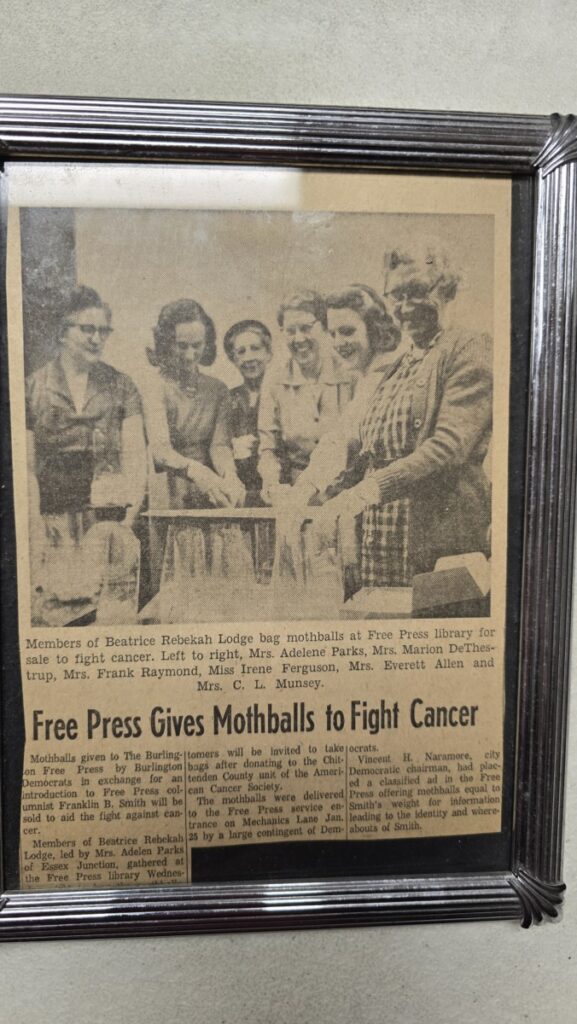
Ryon: So, right. So, all right. So the version that existed in the UK was much less centralized. There was not so much of a top-level organization of things. A lot of it was people meeting in pubs and saying, hey, we’re the Odd Fellows handing down some traditions that may or may not have been the same from one pub to the one down the block. At certain points there were attempts to kind of unify some of those traditions a bit. There’s this thing, the Manchester Unity that sometimes comes up in documents and that is an early attempt to unify some of the rituals and procedures and codes of law and things like that.
But it was pretty scattered still. Then, so in 1819, the Odd Fellows in the US were founded by Thomas Willdy. Willdy.
I always want to say Wildy. And he was the man who had emigrated from London to Baltimore and put out an ad in the local newspaper saying, are there any other Odd Fellows in the area? Do you want to join up and try to start a chapter here? And he got a handful of other guys together and they started the Odd Fellows here. Their initial charter came from the UK. But very quickly it took off here and exploded and they decided to organize things slightly differently. It was a lot more structured.
It was very strict about having a common ritual between all the different lodges and there was much more of a kind of collective governance so that people would, lodges would elect representatives to go up to the higher level and then those higher levels would elect representatives to the top level. So, the IOWF, the Independent Order of Odd Fellows, it is independent from the Odd Fellows in the UK. That’s where the I comes from. And most of the Odd Fellows lodges in the world right now are under the IOWF. So it started in the UK, came to the US and the form that it’s most commonly around the world right now is the one that was started in Baltimore. Very cool.
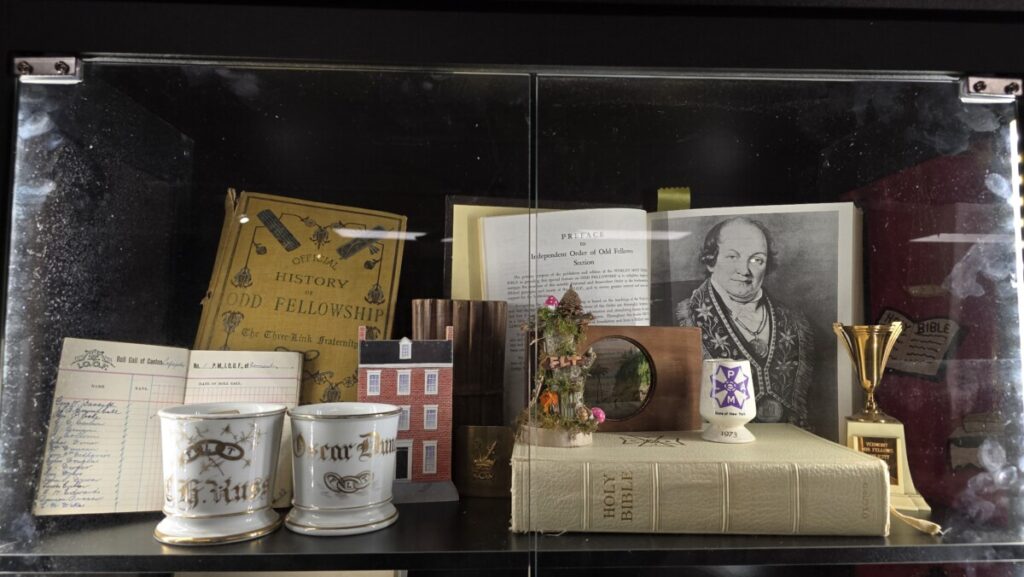
Teppi: What are the other variants? I think that’s really interesting.
Zachary: We can’t get into the IOWF. It’s too complicated, surely.
Ryon: I mean, it’s complicated but it’s good stuff. Oh, yeah. So, there are still lodges in the UK that are under the Manchester Unity. There’s also another chapter of the Odd Fellows in the US, which is the Grand United Order of Odd Fellows.
They were chartered directly from the UK. And there are historians who specialize just in that and they would be the better sources for all of this but I’ll give the very brief version, which is that in, even it was in the 1820s or 1830s, there was a group of black men who applied to create their own Odd Fellows Lodge in Baltimore, actually. And the Odd Fellows at the time, which had kind of spread to a bunch of different states and we’re talking the lead up to the Civil War, the motion to accept, to charter this lodge that was going to be mostly black men, never got shut down but it also never made it to the floor. So people kept basically tabling the motion and preventing that lodge from getting chartered. So these folks came up with a creative solution, which was they said, well, if we’re not going to get chartered in the US, we’re going to send a letter over to the UK and ask for a charter there.
So that’s what they did. And so they got chartered under the Manchester Unity the same way the Independent Order of Odd Fellows did. And so they set up a parallel branch of Odd Fellowship that was specifically for black members.
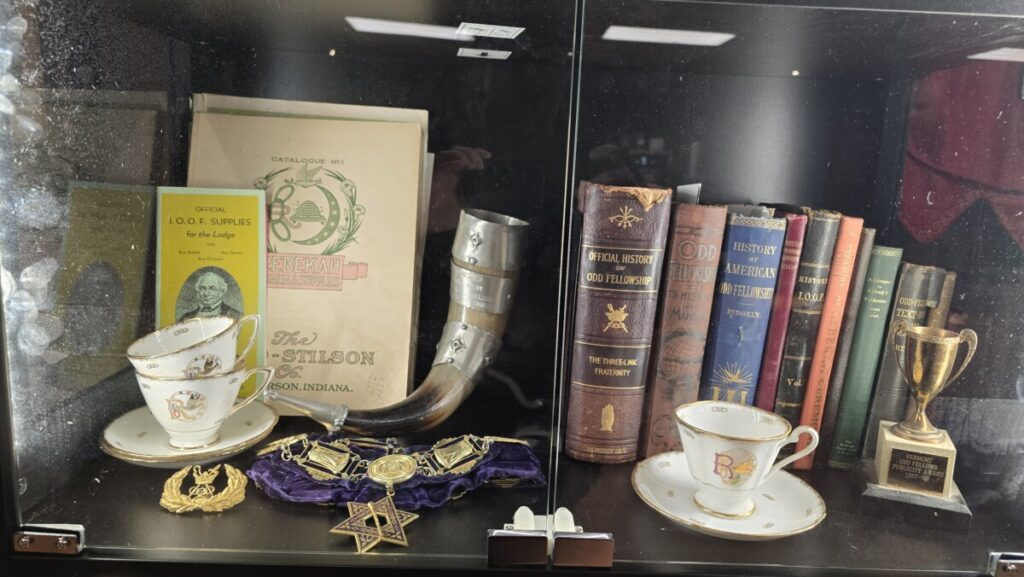
And the GUF has its own very rich history. The rituals are very, very similar. A lot of the traditions have kind of diverged a bit over time.
These days, everyone is welcome in both. And there’s in like Odd Fellows meetups, Odd Fellows kind of, when Odd Fellows stuff happens, there’s definitely some crossover. But like it is important to recognize that the Independent Order of Odd Fellows had a long history of anti-black discrimination. And so black people wanted to be Odd Fellows, found their own way to do it. And there’s massive amount of history just about the GUF. They’re really cool. Really cool stuff.
Becca: Yeah, I admire them for not giving up. Give them the finger. I’ll call the guys in Europe. And yeah, that actually tracks a lot with just the timeframe too, because England got their shit together a little sooner than we did.
Ryon: England did not know that these folks were black. Oh, wow.
Becca: Fun thing about writing the letters, you can just write a letter.
Becca: I wonder if that would have changed things or not. Hard to say. Hard to know. Now it’s lost to history.
Zachary: When did Odd Fellows, the IOOF officially integrate?
Ryon: Way too late. It was the 1960s.
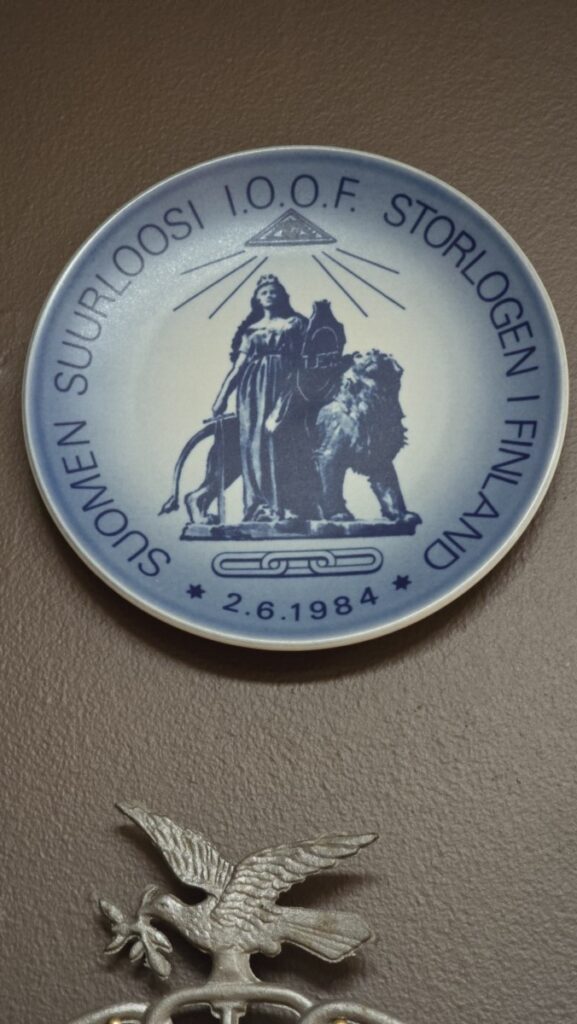
Teppi: But that’s, I mean, women being allowed in the order too was like, wait, wait, wait too late. Just 2000. Yeah. So it’s kind of like, we were just behind.
Ryon: That’s when women were allowed into the Odd Fellows. But the Rebecca’s were part of the order as well.
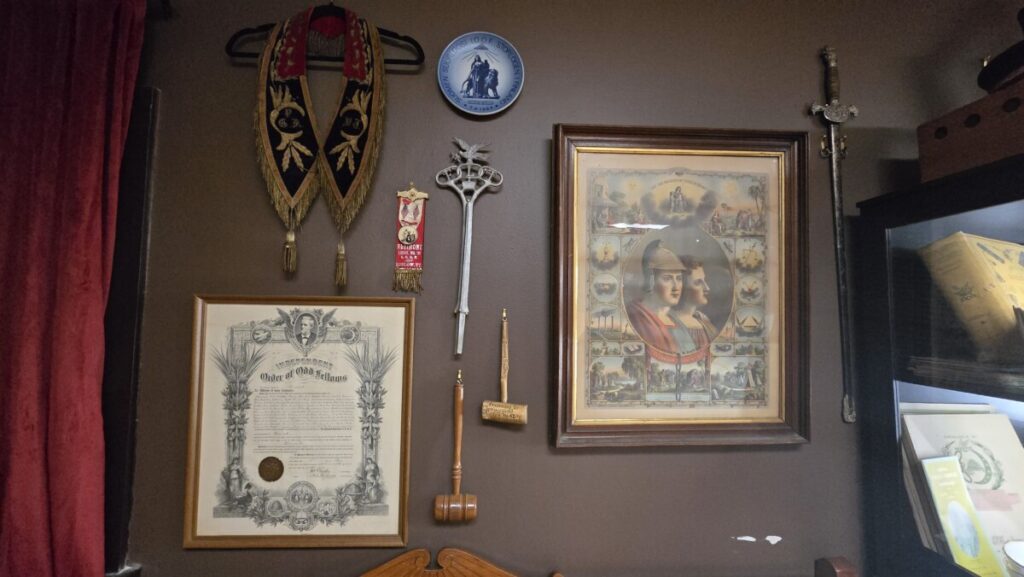
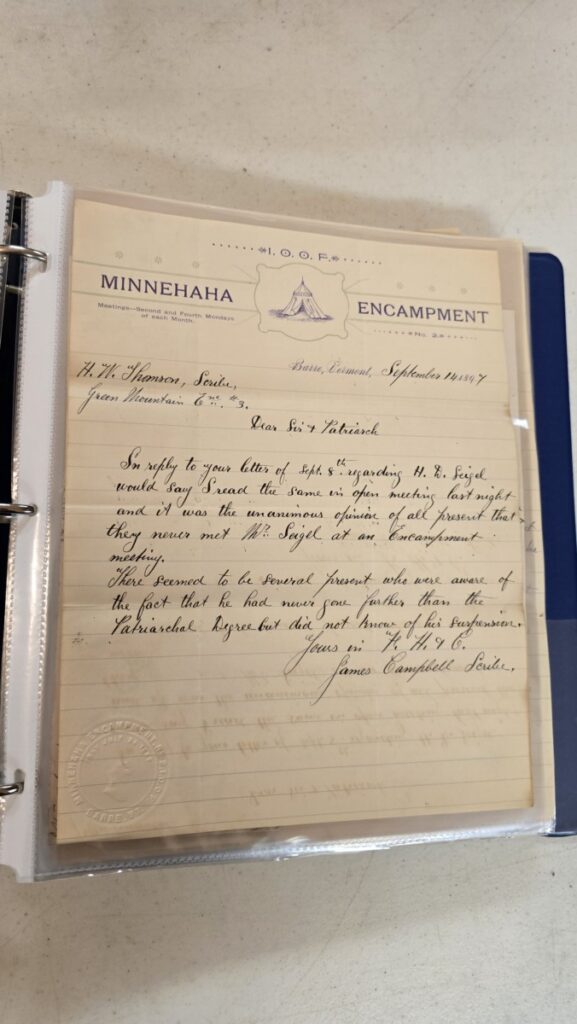
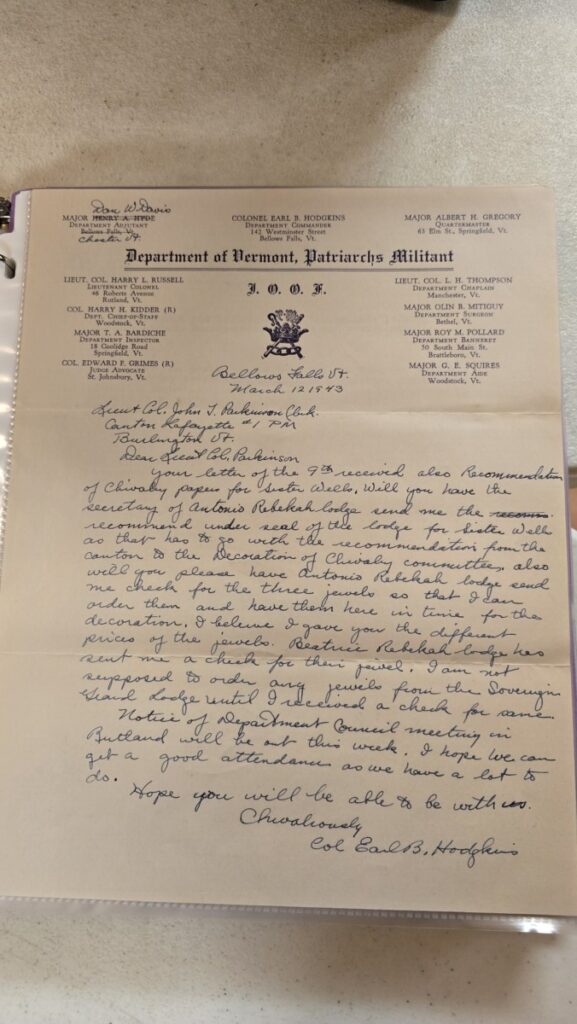
Becca: Yeah, right, because all that stuff is from the 40s. We’ve been looking at a bunch of documents. All that stuff, all of the interesting physical history that you guys have collected here. Clearly women have been involved in this place for a very, very long time. So it’s funny that they weren’t official members.
Ryon: Well, so the Odd Fellows were the first fraternal order to have a women’s branch. And so the Rebecca’s do have a very long history and they are, we’re all part of the same order. It is the order of Odd Fellows, which is that the lodges were separate. So like the actual meetings where things were decided were separate. And so like different bank accounts, different, you know, organization.
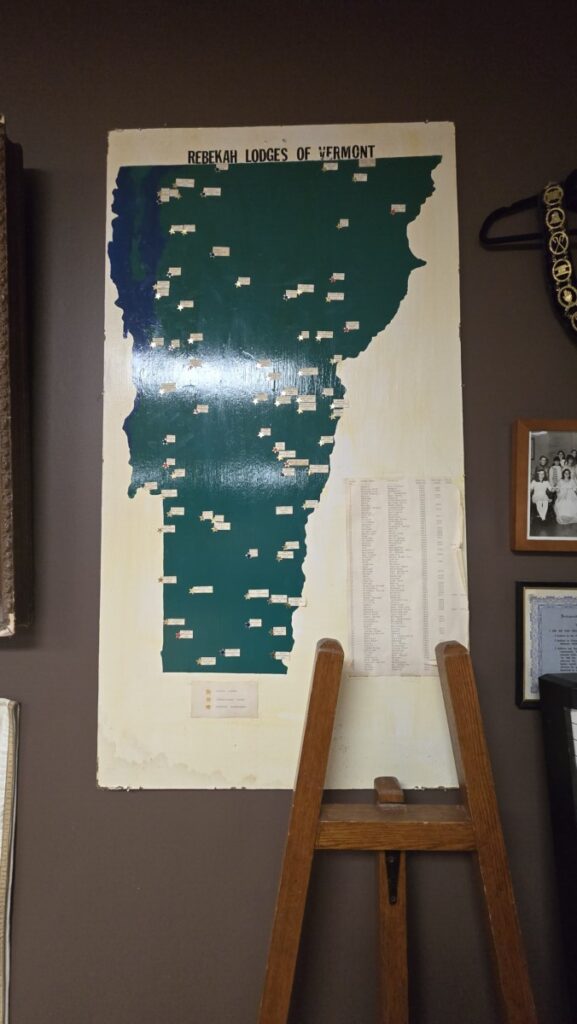
Zachary: I’m pointing off to the big map we have of the state of Vermont with Rebecca lodges of all across it, dozens of stars. So those were separate from the Odd Fellows lodges.
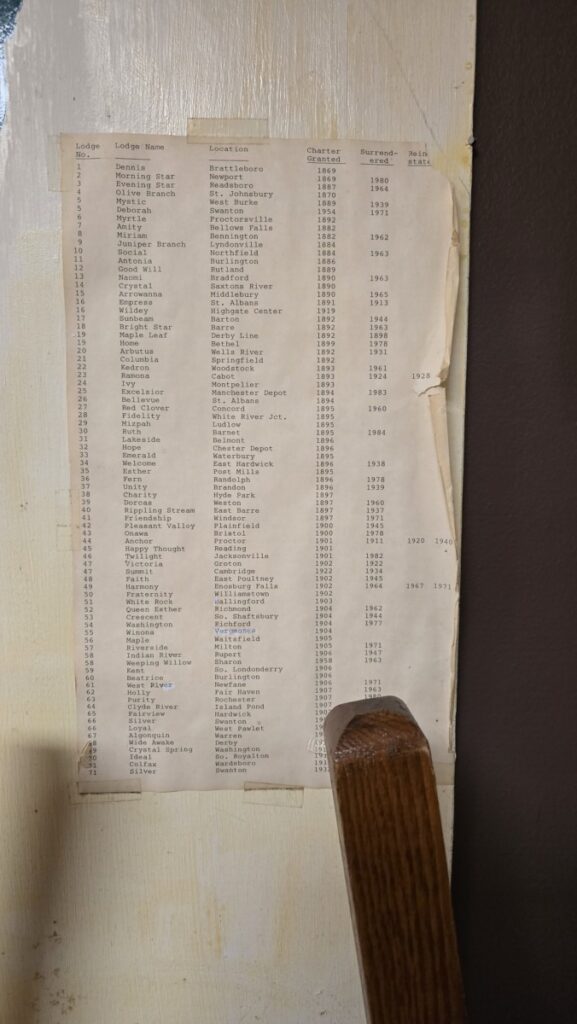
Teppi: They were all separate. Yeah. And also not dozens. It’s like 76 lodges on that map.
Zachary: That’s dozens.
Teppi: I can say dozens. That’s almost 100. I’d be like close to 100.
Becca: OK, so looking at this map over here, there are 70 something. Rebecca’s lodges.
Teppi: About 76 Rebecca’s lodges that existed in Vermont at some point. At this point, there are much, much, much left. There’s two. There’s two.
Zachary: But as soon as you start looking around in some small towns, you’ll start seeing the three links symbol or the Rebecca’s flower and crescent and bird, you’ll see all the symbology in some of the buildings. Right.
Becca: It’s probably been just kind of absorbed into the town structure, honestly.
Zachary: Now it’s a bank or something.
Teppi: Yeah. Once you become familiar with the symbols, just walk around any town in Vermont and you’ll probably just see the three links or an I.O .F. or like some people think it’s 100 F.
Zachary: Because the Odd Fellows were the biggest fraternity in the history of the world at this point. What are we talking about?
Ryon: In the US at least. In the 1950s. In the 1950s. We had like three million members or something ridiculous like that. Yep.
Teppi: They’re everywhere. And in Vermont, they were everywhere.
Becca: Yeah. Looking at this map. So I did take a picture and this will be on the show notes page, but there are so many. Like the state must have completely known this existed. Like everyone must have known this existed because basically the only towns that don’t have them are the mountain range right through the middle of the
Zachary: state. Where people lived fraternity has popped up.
Becca: Yeah. Yeah. So that’s wonderful. I love this place.
Ryon: I mean, it’s easy to get lost in like, you know, it’s kind of weird that we started with the like Manchester Unity, G-O-F, Rebecca’s Odd Fellows, like all of the details and the dates and all of this. Easy to get lost in that stuff.
Zachary: The reason any organization that’s hundreds of years old, it feels like it’s hard to like find a place to start.
Teppi: But also this organization specifically is just so cool and has so much cool history. Like you could dive in forever and keep finding interesting stuff to talk about.
Ryon: And the reason why all of that like matters from a historical lens is that like this thing was huge. It was so huge that there were multiple splits and divisions. It’s like looking at, you know, the history of the Baptist church or something where it’s like, oh, yeah, every 10 years some big event happened and there was a new division and everything changed. And when you have, you know, yeah, two or three million people in the 1950s, part of a single organization, there’s a lot of things that those people are going to get up to.
It’s not just holding little potluck fundraisers, which they were doing in every small town in the US. But it’s also, you know, deciding that they want to start their own version of the thing and figuring out a way to do it. And unfortunately, as the modern inheritors of this, we are left with an enormous amount of complexity in the organization. But very few members to make that complexity work.
Zachary: And even fewer to explain. Yeah. Yeah, for sure.
Becca: Putting that in perspective, like when you said three million in America alone, in the 19, like mid 1950s, that’s wild to think about. Because you just think of how our population boom was the baby boomers, right? And the millennials are obviously like almost just as big of a bubble, if not bigger now. Like three million people in 1950s, that’s like a percentage of the population.
Ryon: Yeah, it was something like two percent of the population of the US.
Becca: That’s wild. Where members of the outfoulers. So we’re actually like involved in this. So this is some, this is so weird to me that this got lost so deeply that this isn’t discussed in our school systems. Like no one seems to know anything about this.
Zachary: A lot of the benefits and purpose of fraternal organizations really kind of lost their stride after the social upheaval of Great Depression and FDR came into office. He was an odd fellow. And they established all these social programs like social security, so old people wouldn’t die in poverty and health insurance and unemployment insurance and disability insurance and et cetera. And as that’s what the Lodge does, the Lodge is a member benefit organization. We exist to benefit our members to pay for members who have some distress, which is what we say, like they have an unexpected bill for their vets or their car or whatever thing that’s happening to them. Member benefit society means we exist to benefit our members. We help each other in good times and in bad and there’s a lot of bad to go around.
So it’s nice to have an organization that really focuses on supporting its members. And so before the Social Security Administration, before the unemployment benefits, you would go to your Lodge and say, I have been out of work. I need money or I am sick and I need money or you would go to your Lodge and say, we have people who just died, who can’t afford a burial. And that was who would pay for that. The Lodge would pay for it. And with the success of the social welfare state, fraternal organizations declined
Teppi: because you didn’t need it as much. Every small town had a Lodge because every town was made of a bunch of farmers or merchants or and they would get together and sort out their needs in a democratic process in the Lodge and pay their bills and pay their members issues and support each other and do fundraisers and do dinners and do the rituals and all the stuff that we do in odd fellowship. But they wouldn’t need it as much after you had the social benefits from the… I want to say great society but that’s LBJ.
Ryon: Yeah, it’s a combination of the New Deal and the great society that kind of the war on poverty and all that. Yeah, as the state began providing more of a safety net, the need for building your own safety net with your neighbors declined. And I don’t think it’s an accident that there is a sudden resurgence of popularity and interest.
Zachary: We’re discovering these organizations that say, hey, they were purpose built for this. They were purpose built for this. They exist. Some of them have a little capital from years of members donating money and buildings getting sold and what have you. So there’s some capital behind it and there’s some great philosophy behind it because the odd fellows philosophy is a philosophy is like anything else and you have a lot of dedicated people who are interested in helping their fellow members.
Becca: And it’s very pure philanthropy. I think that’s incredibly interesting to think about especially through a historical lens where you’re not… Like you guys have rules, right? You have rules and you have
Ryon: ceremonies and all of this complexity because it’s been around for so long but it’s not like a church.
Becca: It’s not like we’re divinely judging you based against something and we’re gonna… See how excited actually. Right. We’re gonna withhold aid if we don’t think you align to our principles. It’s like the opposite of that where it’s just community, like pure community and like let’s work together to…
Zachary: Mutual aid. Right. To keep each other okay. Working, pulling resources for benefits of the other members. That’s what we do.
Ryon: And I mean a lot of early like anarchist and socialist thinkers looked at lodge systems as inspiration for how to organize small groups of people effectively. And the 200 years of history also means 200 years of working out how you can structure a meeting in an organization to be able to address people’s needs and not get cheated by bad actors and also keep people’s secrets effectively. One of the things that people stumble over the secret society thing.
Like yeah, we are a secret society. Our meetings are closed. You can only be in a formal meeting if you’re a member.
So I mean you’ve been voted in, you’ve gone through initiation, someone has sponsored you. Why do that? Why have secret meetings?
Well the biggest reason is because if somebody wants to come to the meeting and say, hey, I’m actually really struggling right now. I got laid off and I can’t pay my bills and I really need some help. You don’t, not everyone wants to do that publicly. If you want to need to talk about a very specific medical issue that’s causing you problems and you need help paying that bill. That is not really a great thing for a public forum and we’ve kind of gotten used to the GoFundMe approach where all of that is out in public.
Becca: Well that’s it. You have to grovel. That’s the kind of society we live in. You have to beg for anything and yeah, make it public. Regardless if it’s embarrassing or you really don’t want to because your other option is lose your house. You know, like the worst alternative, right? That’s really interesting because I just, I keep, I shouldn’t compare to churches as much as I want
Ryon: to but like they’re both civic organizations. Yeah. Right. And especially, so I grew up on the Canadian border. Everyone is knuck. Everyone half speaks French, Roman Catholic churches that are like cathedrals.
The amount of money that went into these places in places where we have no money is insane to think about. I can’t imagine someone walking into that church and publicly letting people, like, you know, within the church even being like, I’m struggling. That’s not, like they might do it to the priest but they don’t, they won’t confide in each other like that. That’s really, really, really interesting to me.
Zachary: I mean, as a preacher’s kid myself, there’s been, there’s always a lot of like soliciting prayers for those in need but not necessarily going into details about what’s going on. My dad’s church, they had, you know, speak up if you want to have somebody’s name and we can pray for them for what this, that or the other thing.
But for us, it’s, you know, any member who needs something, they can just come to the floor of one of our meetings, which is just a closed door meeting where it’s only members, you’re among friends and tell us you’re in distress and you need help and we can help you.
Ryon: And it’s not just money. Money is an important aspect of it because everyone’s struggling right now.
Zachary: It could be labor, it could be, you know, time, it could be just any sort of other volunteering.
Ryon: I mean, delivering food to someone who’s just had surgery, which, you know, we’re doing right now. You know, yeah, members who are sick or in distress in any way, the question is how can the lodge help you alleviate that in some way? And we do help each other a lot. It’s one of the best parts about the, about the organization. And one of the first meeting agenda items in each one of our meetings is we ask if there are any members sick or in distress, you go around the room and if anyone knows of a member who’s struggling in some way, or if you yourself are struggling, you speak up and we try to figure out a way to help.
Zachary: Or it’s just a little therapy. Yeah.
Ryon: Right. And you can also just complain.
Zachary: Sometimes it’s just a little group therapy. Yep. Right. Because life is tough and it’s nice to do that among friends.
Teppi: We actually, we have a signal group chat now to you where I feel like before, you know, it was very much that segment of our meetings and everyone would talk.
But now in the group chat, it’s just anytime someone’s like, hey, I’m kind of stranded on the side of the road and I need some help who can be here.
Zachary: Can somebody watch my dog?
Teppi: Can someone watch my dog? Someone watch my kids? And then we all show up for each other pretty much as quickly as we can.
Becca: Right. The community structure and it doesn’t have to be money. Yeah. Right. The therapy aspect, I think I love mental health. I want to pre-cursor this like mental health care is so important. But I think we kind of like weaponized some terms to make them clinical to be like, no, you got to pay someone to do that. That’s therapy. You can’t tell me about your problems. Like I’m your friend.
I’m not your therapist. Like what do you think people did a hundred years ago and they were fucking struggling, you know, they would just. You get support from your community. Yeah. You tell your neighbors. Tell your friends. You tell your family. Like that’s not a bad thing. Like that is community.
Zachary: That is having friends. It’s community building and it’s solidarity building. You know, just like when, you know, 150 years ago, somebody’s barn burns down. You’d have a family who needs help and they’d go to their lodge and the lodge members would come help either repair or build or tear down or whatever it is they needed to do. And that was in almost every town. Every town had a lodge. It was so local. It was so hyper sensitive to its members’ needs that it’s really something to aspire to. Yeah.
Becca: Now, looking at that map is really wild as someone who’s lived in this state as long with literally my entire life. I’ve never not lived in Vermont and that’s kind of been lost. It’s weird coming from a tiny town like that that did have real community structure and right around the 50s, right? Right around this time where when you’re saying, oh, these social programs kind of like took over, there was a real loss of community and you can see it’s like decaying buildings. It’s, oh, we used to have town dances. The old people would talk about this like community sense that’s been completely, not completely lost.
Obviously, you guys are still doing this, but so much of it’s been lost and so many people are struggling to find community outside of a religion that they’re not comfortable with.
Teppi: I mean, it’s like the loss of third spaces is a big one too. Part of that is like having a building is expensive to gather in, organizing people to go to one particular place for like a club. It can be really hard. A lot of people just don’t have the time. They don’t have the energy.
They don’t have the resources to just like gather people. It’s really special that we have this here, but I think a lot of those spaces were lost, the big obvious one is like the internet. You can find your kind of quote unquote third space in a chat room or whatever on Instagram, but it feels so impersonal on the internet.
Becca: Yeah. Like it’s cool. You can, you know, you make friends with people all over the world, but it’s not like, are you going to be like, oh, you know, I got laid off. I’m struggling. My dog died. Like, are you really going to do it?
Probably not. Like maybe I know there are some discord groups who are like, oh yeah, my best friend is someone from California. For me, I’ve never remotely experienced that. So power to you. It’s better if you can actually meet up in person in my opinion.
Teppi: Well, I think that’s something that like the pandemic kind of did for a lot of people were prior to that, I feel like I was more like, I’m going to go online and talk to my friends and whatever. And then I was stuck in my house for so long, not getting to be like around, you know, other human beings physically.
And I just kind of like, I really, really needed spaces where I could do that. And I just, I didn’t want to be on a computer anymore. I didn’t want to be on my phone anymore. I just like, I wanted to meet people in person. I wanted to see people in person. I wanted to like, you know, have fun and do little craft nights and go to music shows and all these things that I’d been missing. And I just like haven’t, I feel like I haven’t been back to the point where I’d rather just like be online and on Facebook or Instagram for hours and hours in my bed.
Becca: There’s a huge tactile loss. Like, I don’t know, just thinking of eating food with people. Yeah. Right. You can eat food and be on the internet and have a video chat. It is a very different experience and vibe. Same with music, right? The, the like streamed concerts. Cool. Not the same. Not the same.
Teppi: Absolutely not. That’s huge. Okay. So I want to, we’re going to swing it back to this specific location. And this building is not original. So this isn’t from the 1800s. No, no, not at all. No. But what, what is the story here? Do you guys know who originally started this lodge?
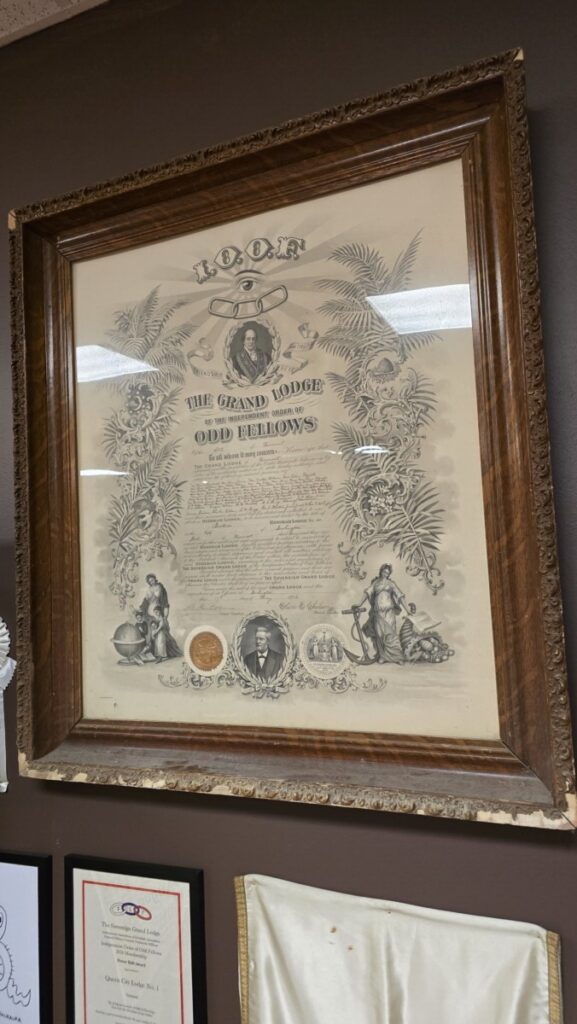
Ryon: And well, so the lodge, when we say lodge, we don’t mean a building. We mean a club, an organization. And it is literally tied to a specific document. So we have our lodge charter up on the wall.
And that is the document that allows us to operate as an organization. So the lodge, the Burlington Lodge started in the 1840s. And I actually don’t know the original location of that lodge. It’s a building that no longer exists. Yeah.
Becca: The road might not even exist anymore.
Ryon: The, the first location that we definitely have a clear record of was the old sanitarium, which was on Bank Street. It’s, it’s like right near where the, the parking garage entrance is now.
Okay. And so that was the old sanitarium back in the late 1800s. That was the home to two oddfellows lodges and two Rebekah’s lodges. And then in the early 1900s, they built their own building and moved to it. And that is now a building that’s part of the Howard Center. So it’s like right next to the old movie theater. There’s a building. It’s right next to City Market. It’s right next to City Market. Yeah. Okay. Cool.
Becca: Yeah. Right in the little stretch. Does it still exist? Is it still the same building? It’s still the same building.
Teppi: We don’t own it.
Becca: Right. But at least it’s, it hasn’t been knocked over. I don’t know. They keep on smushing things together. Yeah.
Ryon: Somebody at some point thought it would be a good idea to sell the building to raise funds and then lease it back from the person they sold it to. And that got too expensive pretty quickly. And so they moved out to the suburbs on the building that we’re in now. They moved out here in 74, I believe.
74, 75. And this building was originally a Jehovah’s Witness Hall. Yep. And they did quite a bit of rearranging things to turn it into an odd fellow’s building. You know, built some new walls, built some new closets and everything else.
Teppi: Check out some like weird in-ground planters apparently.
Ryon: Yeah. That was like a fountain or something.
Teppi: Yeah. It’s like a fountain. And then they just like, yeah, just big, weird things with lots of plants in the nook over there. Yep.
Ryon: Yeah. But anyway, so that’s how we ended up out here in this building. Yeah, we’ve been here since the 1970s.
Zachary: Interesting. But we also own a few other things around the state still, like the Gil Home in Ludlow, which is a rehab retirement facility that serves, I think we have 45 beds or so, which is usually pretty full. And we also have two apartment buildings across the street from there, which are retirement apartment buildings, ones owned by HUD, ones owned by us. And they are specifically for retirees. And so we have a couple buildings in the south. And then we also have the Colfax
Teppi: Lodge, which is a different lodge. We still own Colfax, which used to be a toy factory. Oh, cool. That’s the coolest thing.
Ryon: It’s a great old building.
Zachary: It’s beautiful. Yeah. It’s a spooky old building.
Ryon: It’s down in Belmont, Mount Holly. Mount Holly, yeah.
Becca: Nice. Very cool.
Zachary: But then you look around the state and you’ll start seeing those old buildings. The remnants of the old lodges all over and basically every town. Yeah.
Becca: Yeah. That’s it. Looking at that map, how many towns are in Vermont? Like 300? 200 and 250?
Teppi: Right. There’s the club. Yeah. I’m trying to remember the name of the club. It’s like 200, 261.
Becca: I think it’s 251. 251. 251. Yeah. Large percentage of towns used to have lodges. That’s so crazy. It’s so crazy to me that I never heard of this and it existed right where I grew up. Yep.
Zachary: Well, it didn’t really serve its purpose when we were kids. I mean, it was purpose built to support members and do member relief. And folks were really sold on social welfare programs and or like strong, pull yourself up by your own bootstraps. They don’t want to ask for a handout. They don’t want to ask for help. And so I think there’s a few different things that came together that sort of drove the independent order of odd fellows into a less popular position.
Ryon: Well, I mean, there’s this great book, Bowling Alone by Robert Putnam.
Teppi: I was wondering when someone was going to bring that up. I have to. It’s in my contract.
Teppi: So it dives very deep into the decline of civic society in the US starting around the 1960s and continuing today. Civic organizations of all kinds have declined by over 90%. Yeah, we’re talking everything from PTA to churches to fraternal orders like us. And the sharpest decline of all of the types of organizations is in fact with fraternal organizations. They saw the biggest decline over that period of time. And yeah, the fact that we are a member benefit organization and the social safety net kind of removed a lot of the need for that function, that’s definitely part of it.
Ryon: The broader decline, though, isn’t fully explained by that at all. And I think a lot of one of the things that’s pointed to in that book is that the rise of television as like appointment viewing that if you wanted to see your show, you had to be at home at this particular time.
That that really killed a lot of these third spaces. Because when you talk to older members who remember the time before television, they talk about a very different way of living. And one of my favorite anecdotes there is that Everett, who’s our currently our oldest member, he’s 91 years old now.
Teppi: 93. 93. I thought it was not. Anyway, in any case, he’s in his 90s. So he talks about when he was a kid growing up, his parents were both odd fellows in Rebecca’s. And there was two odd fellows lodges and two Rebecca’s lodges in Burlington. And they all met in the same building, but they each met on a different night of the week.
So you would have Monday, Tuesday, Wednesday, Thursday, there’d be an odd fellows or Rebecca’s meeting. And all of the kids would get out of school and just go to the lodge. And people would be cooking dinner there. So everyone would be eating communally. The kids would all hang out. They’d have a space to play. The parents would do their meeting and then they’d go back home and sleep. When you talk to a lot of older Americans, they talk about that as a normal way of living. That you just kind of, you slept in your house, but you didn’t do much else there.
That’s not where you spent your time. You would go to work and then go to your third space and then go home to sleep. And the transition to a much more kind of household focused lifestyle of, well, no, you go to work and then you spend all of your relaxation time at home. And then occasionally you go out somewhere, but you have to spend a lot of money to go out. So you don’t do that very often.
That transition is what killed a lot of these third spaces and really hit fraternal orders hard because it is a big time commitment. Like, I mean, the three of us are here probably pretty much every day of the week doing something.
Teppi: You mean there is- You’re far more than me. No, that’s not true. That’s a lie with the music stuff. But like there is an event here almost every single day. And if it’s not something run by us, I mean, community members are starting to run out the space and like use it. But yeah, we’re, it’s a big time commitment.
Zachary: Right. And so we’re blaming nuclear family and like the households being like little fortresses across the country, right?
Becca: Cause that’s what I see. Oh yeah, definitely. Yeah. The isolation. A country of fortresses of houses basically. Yeah.
Teppi: I know I was talking about the internet, but I was thinking about TV and I forgot that. That was like the first thing.
Zachary: Yeah. Yeah. All right. I can’t come on Tuesday nights anymore because my show’s on. Exactly.
Becca: Exactly. Exactly. Yeah. Yeah. Right.
Zachary: And it was probably like- I just banged my mic. I’m so sorry.
Becca: You are totally good. Don’t worry about it. It was probably like Gilligan’s Island killed odd fellows. Yeah.
Zachary: Well, I remember- We should go back and look and see what was on NBC.
Teppi: I grew up in like a Catholic church family and I remember whenever there was- Oh, in Philadelphia, by the way, so big sports city. Whenever there was like a game on, everyone would be like, I can’t go to church, like the game’s on or I’m going to go watch the game after church. And like everything was like based around like trying to go catch the game and whether or not you’d go to church. Like- Right.
Becca: Yeah. Yeah. No, that makes sense. Another interesting point, different than TV, much later, video arcades and what happened when the home console became a thing because it’s the same kind of thing where children used to group together to play these new exciting video games and adults too. Everyone used to love to go and play these games and then all of them went to Super Nintendo and then Nintendo was in your living room. And then gaming became an isolated thing and those third spaces died. And it seems very, very similar. It’s interesting to think that something as stupid as a TV schedule, but that makes total sense because there was no reruns, right?
Teppi: Like if you did- Streaming’s the reason third spaces are coming back.
Zachary: Because nobody’s on the same algorithm. Everybody’s got their five or whatever different streaming services with different programs.
Teppi: I can binge whenever I want. And that’s when I come home from the lodge.
Zachary: Did you see that new movie coming out called The Rip with Matt Damon and Ben Affleck? They said they have to restate the plot like four times in the movie. The producers wanted them to restate the plot a few times in the movie because people aren’t paying attention.
Becca: Oh yeah, this is a whole thing because the chick from The Good Place, she said the exact same thing. That it’s across every studio. They’re being told you’ve got to say exactly what you’re doing in the dumbest way because everyone’s on their phone and they want to look up every five minutes and be like, okay, I know what’s happening. And then look back at the movie.
Teppi: That’s specifically like the streaming, the movies like made for streaming or like the series made for streaming. Yeah, I just watched a whole thing on this. Oh good. They actually start buffering out the series that could have been one documentary length episode or whatever to six documentary length episodes because people aren’t paying attention. So they’re just restating stuff or adding in filler because if it’s too interesting, you’re not going to be on your phone and you’re not going to like watch it.
Zachary: Nobody’s on their phone at lodge meetings.
Becca: Yeah, no one except me. Except for most of it. Oh, is it a rule?
Zachary: No, it’s my wife. First meeting, my wife didn’t want to open up a can of a drink because she was afraid of making a noise.
Teppi: I said, we’re not that formal. She came to a really exciting first meeting though.
Zachary: And a lot of stuff to talk about. Sometimes we don’t have anything to talk about. And sometimes during the meetings, we have just a ton of things to figure out.
Ryon: I mean, it’s a good segue into the way the meetings run. Because one of the common questions we get is like, is this a cult? It sounds like a cult. Why do you have weird symbols?
Zachary: Why are you meeting behind closed doors? Why can’t we see inside? We do have secret handshakes.
Ryon: We do have, oh, we have secret handshakes, passwords. We have all the fun stuff.
Zachary: We have all the cool stuff you don’t get to know until you join. Yep. And you should.
Ryon: But it’s not a cult. My big answer to like why it’s not a cult is that it is fully democratic. So the way the meetings work is as soon as you’re a member, you have the right to propose a motion and you have the right to vote on any motion that’s on the floor. There are officers like secretary and treasurer and the noble grand, which sounds very fancy. Zachary’s our noble grand right now. So I’m pointing at him.
Zachary: Very noble, very grand.
Ryon: Fun thing about if you are the noble grand, you get to moderate the meetings and you can’t vote and you can’t propose motions. And you don’t have any veto power. Keep the sludge.
Teppi: Can’t run. Just trying to keep it moving. Can’t run any committees. Yep, you can’t run any committees. Can’t really play with committee money. Yep. You’re very limited in what you can do. You’re just running meetings and signing stuff sometimes.
Zachary: I’m the spiritual leader.
Ryon: So like there’s a lot of, you know, I think when people join a new organization, they’re going to assume that there’s some board somewhere that can veto your decisions. There’s some other…
Teppi: It’s us. It’s literally you join and the moment you’re a member, you can vote on anything and you can propose anything. And this building out here, the mural, that got done because I joined and at my first meeting, I said, this building looks awful.
Can we get it painted? And I was sitting around a folding table in the basement here with the five other members and they all looked around and said, is that a motion? And I said, sure. And they said, all right, let’s do we have a second, put it to a vote? Okay. You’re now the chair of the mural committee.
Zachary: It’s a vehicle to get things done. If you want to be a doer, if you want to be a doer, it’s a great vehicle to get things done.
Ryon: And it’s true. You show up, you have an idea, you propose it and people like it, it’s going to happen. And we have resources and a whole lot of people who are willing to help with good ideas. So yeah, stuff just happens very quickly.
Zachary: My first meeting was in April, I think, or the end of March. And it was the news broke that one of the music venues, more than one music venue in town closed in Burlington. We’ve lost Despacito, Arts Riot, which changes name and is something else now.
Teppi: No, Arts Riot is SEBA now.
Zachary: Arts Riot closed and is now owned by somebody else called SEBA. You don’t know SEBA? I know it’s a thing.
Teppi: Oh my God. I don’t get out. Sorry, I love SEBA. I’m too busy with the large. I’m too busy. I have too much going on here. Drink just closed.
Teppi: Drink just closed. A radio bean is talking about how much in debt they are and they can’t play. Nectars. Nectars just closed.
Becca: Nectar. Basically everything. My first meeting was all of a sudden we have these bands reaching out to us needing a place to play because they were touring and they had little gigs lined up at some of these venues and all of a sudden they didn’t have a place to play anymore.
Teppi: Oh, and the other reason they picked us is because our oldest member Everett apparently used to give like, there were like some high school kids that just like wanted to run hardcore shows here and he would just be like, here’s the key, go crazy.
Zachary: Hence the broken chandelier we still have.
Teppi: Yeah, broken chandelier. Back from the early 2000s.
Teppi: And they would just like throw these like really like insane hardcore shows with like, I mean like now we’re like really dealing with like insurance and you know safety and all this stuff and we’re like, well pretty well stacked. Maintaining our capacity. Yeah, maintaining our capacity or whatever but like, yeah they were just like wild and out in the early 2000s and so the band started coming to us and we hadn’t been really playing shows here for I don’t know like 10 years minus one.
Ryon: We did one in 2004 I think and we were hoping to make it more of a series but it didn’t take off from that 2024. You keep saying.
Teppi: But I keep saying 2004. Minusing the 20. 20
Ryon: years, you’re just taking 20 years.
Zachary: You’ve done this so many times today.
Ryon: It’s because I’m so ancient. Yes, yeah, it’s weird. He’s got a big gray beard. Yeah, he does. Yeah, I do. That’s thanks to the odd fellas.
Zachary: It’s mine, Kamala. Yeah, so we tried to kind of revive it with one big show. It didn’t take off at that point but yeah, Zach you came in and kind of took over the music project right away.
Teppi: Yeah, thank goodness because I’m so glad you joined when you did because we had just a ton of people from the Burlington DIY music scene being like can we run shows here? We need a space. We can get you equipment. We can run sound for you.
Like we can do all of it. We just need a space so bad and we heard you used to run shows. I was like, oh, that sounds fun being a music venue.
But then Zachary came and just kind of like really ran and made it all happen. You’re like the whole reason we’re able to do this because you’re literally at every show making sure things are like as a volunteer, you’re at every single show making things work.
Zachary: Like I said, it’s a great place if you want to do. Like I needed something to do and I found something that I remember as a kid going to UU Church in Barrie, UU Church in Montpelier, basements of churches, you know, congregational, whatever you end, you know, punk bands, ska bands. There was big ska scene when in the early aughts that I was doing that. And I remembered those being some of the most important formative experiences I had. And like, you know, I learned about my community and I learned about the place I was at and I learned about the bands and I learned about the people I was with. And so when I heard the opportunity at that first meeting, I said, I like raised my hand and said, I’m doing that. And I just have kind of plowed my head into it ever since. And now we’ve done I forget how many shows.
Teppi: I think I said, I think I said it was over 30 at this point. Yeah. Yeah. And we’ve only been doing it since, yeah, like May.
Zachary: May 2nd, 2025 was our first show. Wow. Look at that. You know the date. And you can look at insert photo here of a baby egg, what is it? Robin’s egg blue walls.
Teppi: Oh, yeah. Before we painted everything and made it into a museum. Nothing on the walls. It looked just like a horrendous, I mean, it was intimidating. It was scary. I got in here and I was like, what am I getting myself into?
So then with a couple of meetings later, it was like, oh, we’re painting in this place. All right. So cool. We painted it in June and all of a sudden we started looking professional. We had like people showing up and writing articles about us. We were in seven days at some music venue and as a community hub. They were interested in our seven days. Did the connections issue last year where they talked about our craft afternoons and a couple of the other things we do like the music programs.
And it’s just really taken off. And the pantry, especially the north end food pantry is started here as a member just wanted to open. We have a building.
How can we use it in a way that serves the community? They wanted to open a food pantry, Tom Flurry, and he just started a food pantry. I think it’s been like 13 years now. And a few years ago, they finally turned it into a 501c3. It wasn’t just like a committee of the lodge anymore.
Right. It could finally be its own thing and get tax deductible donations because as a lodge, we’re tax, we’re not profit. We’re not that kind of nonprofit. Right. We’re member benefit. So it’s different. So you don’t get to tax deduction for those. But yeah, the energy has been there.
Zachary: The people are interested. They want this third space. There’s a lot of…
Becca: There’s so much culture going on
Zachary: in this place. There’s a lot of culture. I wrote a post that was asking for help. And I’m thinking of what I say we do here. And I said, we host music, arts, and culture. And because that’s what we do here.
Teppi: That’s pretty cool. I’m really happy to be a part of that because that didn’t exist in the same, anything close to the same a couple of years ago. And you had to go to a bar and you had to… In 242 Main Street on Burlington was a teen center that was music venue, very popular. We are kind of filling that void that 242 left and the community lost. And so it’s really special to be a part of. And I admit…
Becca: We appreciate you.
Zachary: I don’t have a life. So I can be here every Friday and Saturday night.
Teppi: So as we record this on a Friday night. Doing what you love. Doing what I love. Yeah, no, no, no. Absolutely. I love cleaning up vomit. Oh yeah.
Teppi: That’s a thing.
Ryon: That was only once. That was twice. That was twice.
Zachary: Oh yeah. Once on the carpet, once out there. Oh yeah.
Becca: Same night though. Different nights. Oh no. Oh my goodness. But I will say the music side of it. Music’s interesting because I feel like the churches having shows in 242. Most of these spaces didn’t have like art though. I think having a community space where you can come make art in a non… I had to pay $200 for this class sort of way. It’s really cool too. And I haven’t even gotten to come to any of the art nights.
Teppi: I mean that’s something we’re still trying to build it. And one of the inspirations towards it was kind of making these like free accessible like art classes where the community can just kind of like share the thing that they’re good at, teach people how to do it.
Zachary: That’s how the craft afternoons started even.
Teppi: Well that’s what I’m saying. Yeah. A skill share kind of idea. We wanted to be more a skill share. So we were at one point we were all like learning how to sew.
And at one point we were working on these gigantic spiders for like an immersive Halloween thing that was happening at a bar. And just trying to find these like how can we come together as a community, teach each other and make things together and just like have a good time. And yeah we’re always like looking to build that. We started doing figure drawing. That’s been really fun. I’m a figure drawing professor at Champlain and like getting to do it here.
Zachary: Let’s just walk through the week for a second. So yeah it’s a good idea. The week starts on Sunday right? Sunday morning we have the food pantry which runs for a few hours and we get 70 to 90 people a day for those.
Ryon: The clothing drive is this Sunday. Clothing drive is this Sunday. Clothing drive yeah.
Teppi: So it’s also a clothing pantry downstairs.
Ryon: It’s food clothes, diapers, hygiene products, pet food. Yeah it’s a lot.
Zachary: So that’s Sunday. Monday.
Teppi: Sunday also craft afternoons. Craft afternoons.
Zachary: Right. Craft afternoons. And we might be trying to do like a movie thing at the same time. We’re talking about that. So Monday then we have most weeks nothing?
Teppi: No. No, no. Rebecca’s. Rebecca’s. We’ve got pantry meetings. We’ve got a board co-op.
Zachary: A board co-op. A board co-op once a month. Yep.
Ryon: The North Avenue co-op, housing co-op. They meet here once a month. Yep.
Becca: Nice. Yeah very housing super important. Right? So you got the food, you got the pet food, you got the housing, you got the crafts, you got the music.
Teppi: So every other Tuesday. Sometimes co-working also on Monday. Oh that’s right. Co-working sometimes Mondays, and sometimes Fridays.
Zachary: I can almost never make those but Tuesdays we then have meetings on alternate Tuesdays. We meet twice a month to do the formal business of the lodge which is the closed door. We just do the business of the lodge.
It can sometimes be quite tedious. And then on alternate Tuesdays we’ll have what’s called like an odd hour which is kind of a public facing event social for our members but also social for the community. So last odd hour we had a cozy swap which we didn’t get a ton of attendance at but we did have some interest and you know stuff that was brought in people would you know swap and anything that was left over we donated to the pantry.
Becca: What swap? A cozy. Cozy.
Zachary: COZ.
Teppi: These are my things. Bring some coziness to somebody else’s. Let me talk about my babies. So my babies are all the little, a lot of the weird events that aren’t music. I try to kind of revive and the odd hours used to have kind of random themes and then it was exhausting so we were just like you know what things that are popular that we have done before swaps and potlucks. So we have one swap every month and we have one potluck every month and they’re always themed and we change the themes.
So members were saying like oh you know it’s really cold and really gross. I would really love a swap that maybe is just like you know care items and like sweaters and like tea and maybe we can swap recipes and that’s where the cozy swap theme came from. A really weird theme for a swap I know. Maybe not the most successful swap.
Becca: I immediately thought of those like really fluffy blankets.
Teppi: Yeah. Like is that what you’re swapping? Yeah yeah yeah I mean like just anything that’s like co-cooked stuffed animals cozy. And then we’ve got like the hot dish potluck slash casserole potluck because I didn’t know what a hot dish was. Well so. Midwestern hot dish and also it’s just one food it’s just like a bunch of tater tots.
Ryon: So I like the idea of just calling it a hot dish potluck because then it’s up to interpretation. It’s ambiguous. People can just bring food that is hot and call it a hot dish.
Teppi: That’s the half and there’s the it’s half and half because some people say that and then the other people are like I don’t know what that is and I am nervous that I’m going to bring the wrong thing and that was everyone who was at figure drawing last night. Everyone was like you have to explain a hot dish. I don’t know what to bring. Isn’t it just hot food? That’s what I would assume. That no it’s specifically Midwestern tater tot casserole.
Ryon: That’s it’s called hot Minnesota hot dish. Okay. Yes.
Zachary: All right. But I added casserole. Minnesota hot dish. The tater tots are very specific. Yes. So yeah so we do a potluck and a a swap every month themed just because it’s consistent. It’s easy.
People know what to expect from us. Always on a Tuesday. Fifth Tuesday of the month if we have one we’ve been doing some like degree work like odd fellow secret stuff usually but every once in a while we’ll throw in something totally random. And yeah and that’s Tuesdays.
Zachary: That’s Tuesdays. Wednesdays we have a meet here.
Ryon: Yep. Yep.
Zachary: And before that is co-working. Before that during the day is co-working. Yep.
Teppi: Which co-working we also started because we’re so we had some kind of open hours during the day where we could like have contractors come in or like people bring donations sometimes to the pantry on Wednesdays and it just means the building is open so we’re able to kind of you know do that. So co-working is for co-working and also for these like little tasks
Ryon: that we need to be here for. Drop in. Yeah. And then back at it.
Zachary: Oh Thursday. What do we do on Thursdays? Figure drawing now.
Teppi: Figure drawing. Yep. Which has been really fun. And Fridays.
Zachary: Fridays have mostly been music. Yeah. This is kind of an exception. We have most every weekend Saturday is going to be booked for music and most Fridays are booked for music. We have decided no more you know no more three shows in a row because I we had a couple of those that were kind of rough. Yeah.
So Friday Saturday this week we just have a Saturday show which is actually a Burlington Tech Center show. Yeah. So this is coming from the digital media lab people. I remember emailing with them a few months ago they were just interested in like having their students come through and play music and maybe take photos and then do you know use that for their class. But the teacher put together a bill of students who are playing here on Saturday and I just can’t get over how fucking cool that is. Yeah. It makes me so happy. So that’s Friday, Saturday and Saturday during the day also we have the food pantry. So it’s in the mornings. Oh.
Teppi: Sundays also during the day is kid games.
Ryon: Oh yeah. I haven’t talked about it. So yeah. Sundays are really packed.
Zachary: Ryan Ryan I watched a couple of the kid games a few months ago and it is it is impressive to see you wrangle that room of very hyper children.
Ryon: They’re very hyper and mostly neurodivergent. Yes. I started running.
Zachary: These are mostly members kids. Yeah. Well yeah about half these days. Neighbors kids. Sometimes just random kid. I have no idea. It’s kind of no it’s like a friend of a friend.
Anyway. No so I run tabletop RPGs for kids and it started because there were a bunch of members who had kids and wanted to come and do work at the lodge and said how can we keep our kids busy. And so I started running some tabletop role playing games. You know these days somewhat mostly Dungeons and the Dragons because a lot of the kids are slightly older and are into that.
But yeah I know it’s good. It’s usually a crew of a few parents who are here helping me control the room and some days it’s four kids and some days it’s 10. And that’s always interesting.
Becca: But they have an absolute blast. Yes they do. These are core memories. Yep.
Ryon: It often ends with somebody in tears and then by Monday they can’t wait to play the next one.
Becca: Cause they care so much. That’s why they’re crying. This means something.
Ryon: Yeah that was not that did not start as an effort to make it an event. That was just how can I keep these few members children occupied for a couple hours so people can do things around the lodge. And then you know they started saying well wait can we just drop them off. Yeah or yeah some of them. Some of them were like well hey our neighbor is really interested in this too. And it just kind of grew.
Becca: That’s a beauty of community spaces though.
Zachary: So now the difficulty is trying to find a night we can do things because most nights of the week is occupied. I’m always like oh yeah Monday night’s free but it’s never free because I just forget Monday night’s not free. Yeah. Or I forget that we have somebody who’s rented and I need to add that to my calendar.
Teppi: Yeah the renters have been a little tricky.
Ryon: One thing we haven’t talked about with the shows is the fee model that we use. Oh yeah. Cause I think that’s a really important aspect of it.
Zachary: Sure. Yeah so the fee model we use is Not a fluff. Not a fluff, which I didn’t know what it stood for when I first saw it, and neither did anybody on Front Porch Forum when I posted about it. But it’s essentially, nobody’s turned away. So we do all our events by donation, either low or no cost. And the music nights are always some suggested donation amount set by the bands. And the house will take 20%. We don’t take anything of any merch sales, which the artists keep 100% of. And the bands will take 80% of the cover. And if the set suggests a donation for the night was $10, maybe we get $150.
Maybe we get something a little more than that, depending on turnout. And nobody will be turned away though. So we never have an issue with somebody coming up and saying, oh, well, I don’t have $10. It’s okay, come in. Or it’s here’s $4. And we take the $4 and say, thanks so much for coming out.
Come on in. Thanks for supporting live local music. It’s not, the intention is not the full payment of ticket price, which we don’t sell tickets. We do suggest a donation, but it’s just to get people in the door to build an experience for them, to have a third space.
Ryon: And that general model of no one turned away for lack of funds is something we try to do for everything we host. If it’s a third space that only certain people can afford to attend, it’s not a community space. And most of the things that you can do that involve the community around here, you have to pay money to do it. And so that is not the whole community.
Zachary: That is $20 just go downtown.
Ryon: Get a coffee and a breakfast. And so it’s really important to us to have it be available and accessible to everyone and to not make anyone feel bad about it. You don’t have to fill out a form and apply for a scholarship to attend to them.
Zachary: There’s no means testing. There’s no filling out forms. It’s just you are a person who wants to come to an arts event that we’re hosting. It’s entries always by donation. So whatever amount it might my literal spiel at the door is any amounts fine, including zero. So I say this is the suggested donation for the night, but any amounts fine, including zero. And then they either pay the full donation, some lesser amount or no amount, and then I let them in and give them an X on their hand or a wristband or whatever it is.
We’re doing that night for crowd control. And people appreciate that. There are some nights, some shows where I remember people have always donated the full amount or they want to donate more because they feel like it’s so great, the space, and they want to support the bands and they understand how we’re not taking some crazy overhead.
We are trying to just get people in a space and let them do their thing. And it’s beautiful to see and it’s really nice to have people appreciate that. And the fact that some people can afford to support more than the suggested donation is amazing. Most times though, it’s not always like that. Sometimes most of the people will come in and they aren’t able to pay or they don’t have money. And that’s totally fine because that’s just the way it is. We aren’t necessarily paying the bills with our art shows.
Ryon: They are barely paying for themselves, I think.
Zachary: Yeah, we’re losing a fair little money on them for sure. Yeah. And so, you know, it’s the money’s… We’ve decided that the money’s not the point. The money’s nice if we can get a little bit to help us sustain ourselves and help us cover the increased electric bill and increase the fee bill. And all that other stuff which has happened and is way more expensive than it was a year ago. Not just for, you know, political or social reasons, but also because we’re just using more of it.
Becca: Yeah, right, because there’s more people in the space. There’s more people. It’s being used… I mean, a year ago, let’s think about… January… Sorry, January 2025, sure. I mean, like how many nights of the week was the lodge being used? Was it being used four nights a week? No.
Ryon: I’d say probably three or four. You think? Yeah, I think so.
Zachary: Dependent on the week. That’s just impressive for like how big the lodge was at the time. So now with, you know, what did you say we had for membership 60-something, active members?
Teppi: Yeah, about 65 right now.
Zachary: We’re getting dozens of people at these shows. We’re getting, you know, a bunch of people at the figure drawing. We’re getting a bunch of people to craft swaps. We’re getting a bunch of people in the door here. And that’s the point. Yeah. Is it get them in the door and to build community?
Becca: One thing I wanted to point out about this space that kind of separates you guys from a lot of the other more fraternal lodges is the intention and point is not just to entertain as people are drinking. Yeah. Which is incredibly refreshing.
Zachary: All the other fraternal organizations have bars.
Ryon: They usually all have bars. The Masons don’t.
Teppi: The Masons don’t have bars? I find that’s a thing.
Ryon: I think sometimes they do, but they are, the Masons are more like us than either of us are like the other fraternal orders, I would say.
Becca: Do they do events though? No. That’s it. I thought they were a little more secret.
Ryon: So, you know, if we’re looking at comparing the odd fellas to other fraternal orders, the, the odd fellas always used to be called the blue collar Masons. We, the Masons are big on ritual and self development and they are very, very closed generally. They will raise money for outside groups sometimes, but they tend to be focused on the lodge itself and the members themselves. The odd fellows, we do have that member focus. We are focused on member benefits, but that is just the first step. And the, the kind of the mission for us is to expand that the, the bonds of family that we develop with our fellow members to expand that outward to the rest of the community. And to invite people into the space, see what, how can we use our resources, whether that’s labor or money or the physical.
Building we own, how can we use that to improve the community and build those, that kind of familial sense and the familial bond outward to everyone. And so that is a big differentiator for, for the odd fellas.
Zachary: Which is part of why it appealed to me to appeal to me so much, I think. Because that is like a philosophy of seeing the world and interacting with the world that I think is lacking in some other organizations.
Yep. You know, we believe that we are all created equal and deserve to be treated well and with respect and loved and cared for. And we try and do that for ourselves because, you know, no one is coming to save us. We save ourselves. And this is a great way to do that.
Ryon: Yeah. But yeah, and then if you look, if you look around it, there’s, there are a lot of other organizations that are not even really fraternal anymore. Or that are kind of, that started as fraternal organizations and have drifted quite a bit.
Yeah. But like, you know, Alex Eagles, Moose, Lyons, Rotary, all of them trace their lineage back to the Freemasons as, every organization like this does in one way or another. Those organizations, they do, they have a lot of social activities and they have a lot of charitable activities. They’ll do a lot of fundraisers for specific causes. They don’t do nearly as much of the ritual stuff as we do. We are pretty heavy on the ritual.
Teppi: We’re really into community theater here.
Ryon: Yes. Yeah. So when we say ritual, what we mean is that we have, I mean, essentially…
Zachary: Blood from a cup, right?
Teppi: No, riding the goat.
Ryon: They’re little plays that were written in the 1800s, in the early 1800s that, and we have a closet full of antique costumes and props and we put on those little plays. And if you want to gain the degrees of the order, you have to watch one of these plays that the members put on.
Zachary: Our community theater to get that degree.
Teppi: Weird hats. There are so many weird hats. That chest over there is full of weird hats.
Ryon: We’ll show you all the weird hats and costumes. We literally just filled that chest with hats.
Teppi: It’s so good. I did. And yeah, so when we talk about the ritual, that’s what we mean is community theater that we do for members only.
Zachary: I love it. If you are missing out, baby. Oh, it’s you.
Teppi: It’s you. It’s you. We’re missing out if you don’t see it. First degree.
Zachary: I like the initiatory degree.
Teppi: No, no, no, initiation is the best. But first degree is like, I can’t tell you what it is. It’s just, it’s so funny and stupid and weird.
Zachary: We pledged our sacred honor that we cannot tell you what happened.
Teppi: Yeah, we can. So believe us when we say we cannot tell. Like, okay.
Becca: If you want to know, you’ve got to join. Initiation is just like such an experience. It’s beautiful. It’s wonderful. It’s very meaningful. First degree is just pure community theater. Yes, it is. It is.
Teppi: And that’s why I love first degree. It’s
Ryon: high camp. It’s high camp. Oh, it’s so good. Yeah. And so like we have our initiation in three degrees. The masons have 33 degrees, right? Like that’s to give you an idea of kind of the focus, right?
Teppi: And they’re really big on like having people pay for the degrees. Yes. And we kind of just wave all of that. Right.
Zachary: Yeah. There’s a lot of steps. There used to be a lot of steps to getting degrees. It used to be you had to like apply for them and get approved.
Teppi: Yeah, get voted on and all that. To ballot for them. I mean, and now it’s like, we, you want your degrees buddy? Let’s go get your degrees. I’ve seen some photos of some lodges on like Discord and other social media where they’re, I swear to God, they do an initiation in three degrees in one day and I just don’t.
Oh, yeah. How they do that. The degree days. That’s crazy. I mean, I’m not going to get a degree in a single degree is where like one is done in like a straight up cave.
Ryon: That place is amazing.
Teppi: It’s so cool. I do want to go to that one. Yeah. So like it’s both sides. It’s like you could be getting all of your degrees by a DVD in one day or you could be getting one very special degree in a cave and it just depends on the lodge and where you live.
Zachary: It’s a really cool cave. We’re not building a cave. It’s a really cool cave.
Teppi: It’s a very cool cave. It’s really neat. It’s got a great view. It’s like in the open somehow, but also a cave.
Teppi: Yeah. Yeah. No, it’s so cool. It’s like off a cliff. Right. It’s like an amphitheater. Yeah. Yeah. But it’s amazing. It’s very, you know, Google that list man and you’ll find out. They call it the cave degree. It’s third degree, right? Or is it second degree? I don’t remember that is quote unquote cave degree. Yeah, I don’t remember. But they call it cave degree.
Ryon: So I mean, we’re talking about all this like different ways of doing things.
Becca: I was going to say, my next question was going to be about what’s membership like and this is beating straight into that.
Teppi: Actually, so like you, Ryan has kind of alluded to it a little bit about the five people around the table in the basement and, you know, getting like a bunch of people together with their children to try and like work on lodge projects. That’s very much how it was revived. Like you should talk about that whole thing. It was it’s very cool. Yeah.
Ryon: I mean, so the revival of this lodge started in at the end of 2022.
Zachary: It’s largely a cult of personality of Ryan at this point.
Teppi: He is not our cult leader.
Ryon: I’m joking. It better not be because that’s that’s a really cult of personality.
Zachary: You’re not nearly treated well enough for that. I’m sorry. Yeah. So yeah, 2022. I was coming out of the lockdowns. My whole office had gone remote and as had many other peoples. And I was feeling extremely isolated from the world and community and everything else.
I had read that book Bowling Alone back in college and it stuck with me. And I went looking for some sort of old club I could join. And it turned out there was one right around the corner. I thought the building was kind of abandoned. I thought it was abandoned for years. I knew there was a food pantry that operated here twice a week. But I didn’t quite know how. I thought it maybe was just in the parking lot because sometimes it kind of was.
Zachary: I was confused because it was also like at the senior center down the road for a while there too.
Teppi: Yeah, it was in two spaces.
Ryon: I’m glad they stopped that that was confusing. The so I mean the building was brick with old faded graffiti on it and like a broken sign with rusted dusty windows like it looked abandoned. Everyone thought it was abandoned.
And it turned out it wasn’t. I managed to get a hold of a phone number through multiple attempts to contact people. That phone number belonged to Everett who is still I mean he showed up at our meeting this week. The 93 year old member. Yep, he’s our 90. Love him. And got a hold of his phone number and he said, really you want to join? Are you sure?
Teppi: And I was like, I mean maybe I don’t know. Can I like come and meet people?
Zachary: Can I audit this? Can I audit a secret society?
Ryon: So I think it took a few months for them to get a quorum which is five people. So it took a few months for them to get five people together to have a meeting.
And eventually they did. I showed up it was you know pie and soda around a folding table in the basement. I asked for a tour of the building and this upstairs was completely full of junk. Like you couldn’t walk through it. It was just piles of stuff.
Becca: I guess it’s so many of those benches too.
Ryon: Oh yeah we had a lot more benches. So much furniture in here. And I don’t know I looked at the space and said like oh this is just this is a community center it just needs some work. And so yeah I joined up got initiated. My initiation was done by three people. It was Everett, Roxy and Chris.
Becca: Did they have to reference the manuals?
Ryon: They were running each of them was playing like five different parts in order to do that.
Zachary: I was stressed out of the initiation we just did when we only had five people.
Ryon: Yeah let me tell you. Oh and it was done in this room but the room was full of junk.
Zachary: Can you do the floor work in there?
Ryon: We were walking in like weird little sneaky paths through piles of stuff. It was incredible.
Teppi: I have so many questions that I’m not allowed to talk about.
Ryon: I know I know I’ll tell you. Because I actually don’t think you ever told me that it was full of stuff and you did it up here. Yes it was it was rough. Anyway so I immediately brought in a good friend of mine who Dylan he I played D &D with him once a week we’ve been going for about 10 years now. Yeah that week I showed up at D &D and I said hey do any of you want to join the secret society? He’s like yes.
So I got him in and the two of us kind of went through a list of contacts and weird people we knew who would answer yes to that really weird question.
Zachary: I get I get a lot of so many strange looks now.
Ryon: Uh huh yep and yeah most people if you say do you want to join a secret society called the odd fellows they’re going to walk the other direction and some people are going to say oh my god yes I’ve been waiting my whole life for that.
Yes exactly. That’s the people who join and so yeah we just started you know bringing people in pretty quickly we grew to about 20 members within that first year and started like spent most of the first year just making the space usable. Like the majority of that first year was just cleaning. Yeah. Um and getting insurance and yeah the the little things that you have to do to be able to use the space um
Zachary: yeah I mean I kind of think a little bit to when I first started and I’m looking around and like okay so how do we get things done? Yeah. And I’m like oh it’s me. Yeah. Oh it’s me and then I really understood that when we were like all of a sudden we were painting in here and I was the only person here for a little bit and I’m like oh my god I have to paint this room now don’t I?
Teppi: Uh huh. Yep that’s a thing.
Ryon: Yep yeah there’s no one else it’s just it’s just you you just show up and do stuff and that’s how things get done.
Teppi: It’s really crazy that like when I first started coming here it was like I was just kind of given a building and as like you know like a person who can’t like afford a house or whatever I was just like wow I have this building and I can kind of just like do whatever I want completely overwhelming but then it’s like super super motivating and I just spent all of my time here like working on projects and building stuff and
Zachary: you’ve really been so impressive to watch from over here. I’ve been particularly inspired because there’s a lot of like idea having and then there’s doing and you do you do a lot.
Teppi: I try my best to do.
Zachary: You do a lot and it’s impressive and I think.
Becca: I was saying there’s so much cool stuff on the wall is that it?
Teppi: That’s all me. That’s all teppy.
Zachary: Yeah so it’s a lot teppy I helped it a little bit.
Teppi: So yeah so like okay so for a little while okay all right hold on. So I actually knew what the Odd Fellows were before I joined and I’m one of the few people who I think did that.
Teppi: I joined a year and a few months ago yeah like December 2024 was my initiation but I had been hanging out here since like October.
Ryon: Yeah yeah. You’ve been coming to events and stuff.
Teppi: Yeah I was like but I was living in like the upper valley and Randolph so I found out about it from seeing Joyner Die which is a movie based on Bowling Alone the book that we had referenced earlier and there’s a segment with the Odd Fellows in it and I was like that seems cool and interesting and then I was working on a project and this account was following the project that I was working on and I was like what’s going on here and then I became more interested.
So I had been living in the upper valley which is like about an hour and a half south of here like following them since like probably when you started like 2022.
Ryon: So Skunk was the one who started the Instagram and Skunk joined in January 23.
Teppi: So that’s probably when I found out about it. Yes it was like got Dylan in and then Skunk came in in the next initiation after that. So it was in January or February when they started the Instagram.
Zachary: I can’t even imagine how chaotic those first few like meetings.
Ryon: Yeah you can it’s exactly as chaotic as it is now.
Zachary: Yeah but you don’t have all the experience you have now from that. I mean you really came in and you had a couple people who had been here forever who’ve been like the rock of giving us Roxy and Everett and their grandchildren. Great grandchildren. Great. Great grandchild.
Ryon: Yeah Brandon didn’t join until I’d been there for about a year and a half.
Teppi: Oh okay. But he had been participating since he was like six. Yeah. Because his like entire family was part of the Odd Fellows like heavy into the Odd Fellows.
Zachary: But you come into this place and you have just like the frame of reference you have for like what this place should be and what it should like in an operating you know efficient organization that can do things and you just it’s been amazing to watch and I can’t imagine how difficult those first several months would have been.
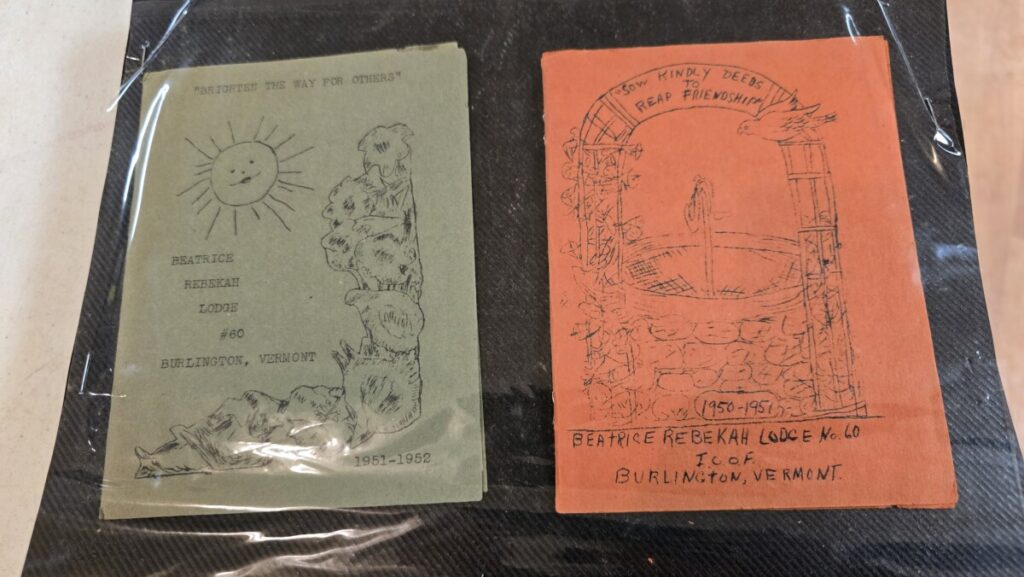
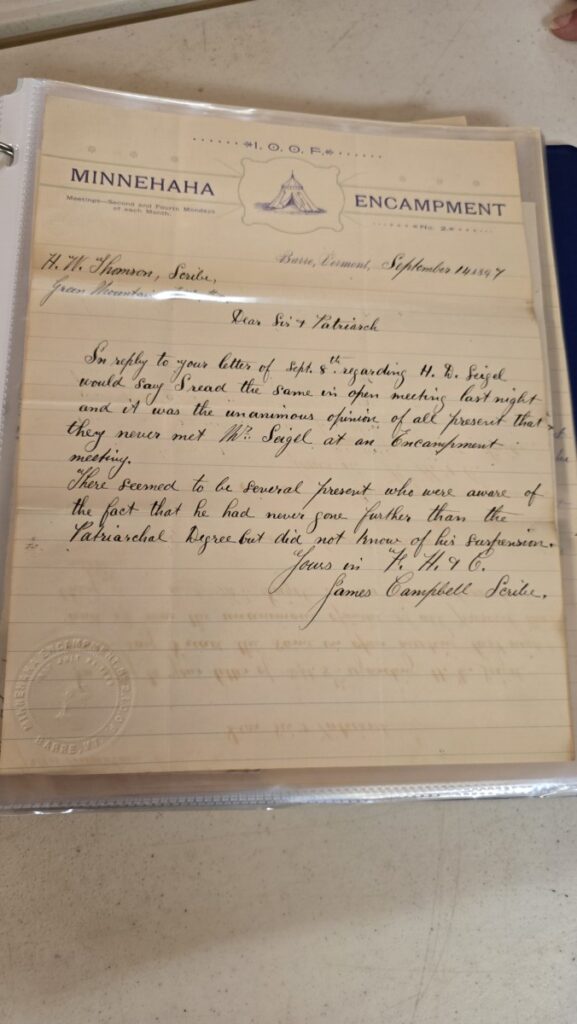
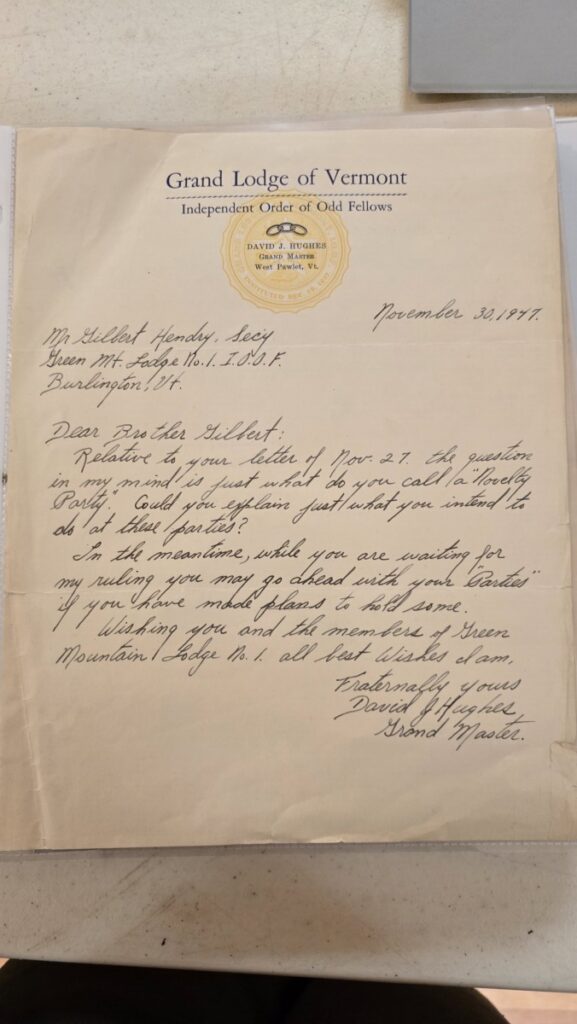
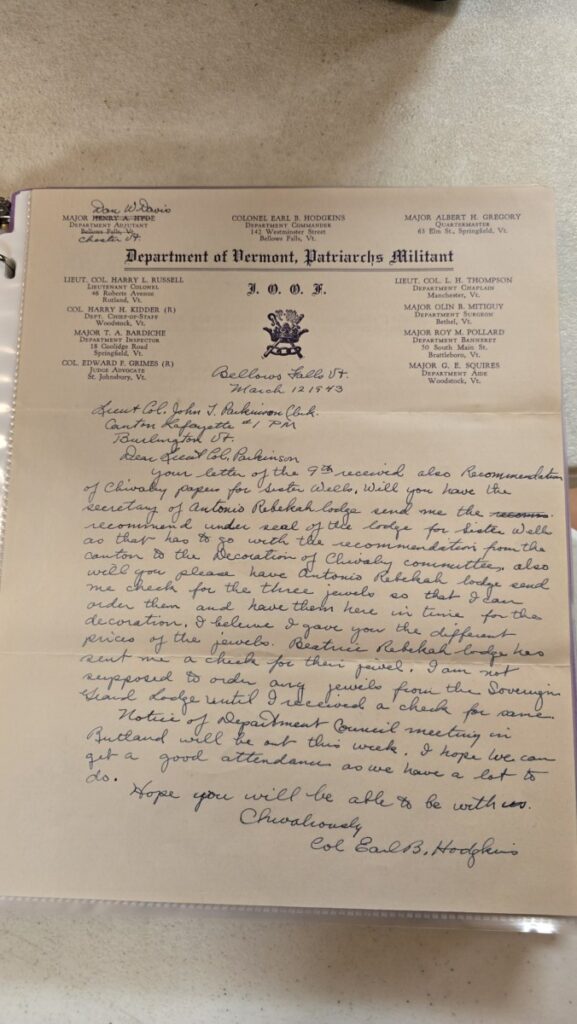
Teppi: Yeah so I mean when I joined it was like it was still kind of in that infancy a little bit and I think like the first round of people that you had brought in started like you know getting busy and drifting off a little bit and then I just recruited my friends and that’s just kind of how it goes you know you just like find a person who becomes really obsessed and and then starts like you know just being motivated enough and having enough time to just do their little projects and we just build on each other and eventually we come to here. So when I first joined a lot of what I was doing was I you had showed me some like old letters and some albums which I had shown you earlier.
I started pulling them out prior to this to be like look at these cool letters that I found in like a secret like storage spot in the wall in the ceiling. Literally. Literally. So I just started going through all of these things and just like the history not just odd fellows history but the local history was like really amazing and I just became completely obsessed and then got access to the Grand Lodge storage unit of everything from all of the you know 76 or whatever closed lodges across all of Vermont just ended up in a storage unit and a lot of this stuff is a combination of things that I found here and things that I was like pulling out of the storage unit anytime I found something cool because I was just complete. I was like it was my special interest like straight up for six months.
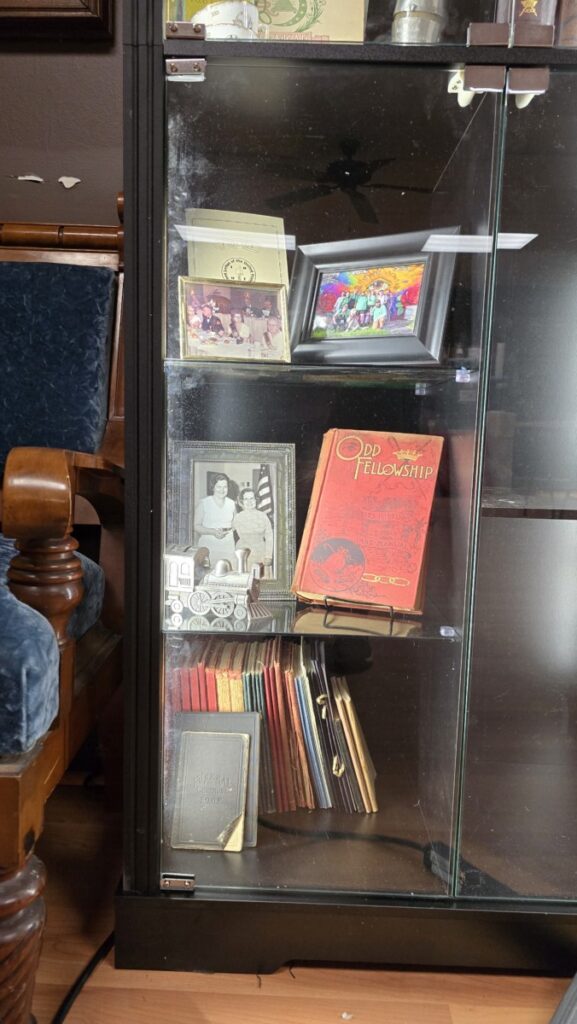
It’s like all I did was go through weird odd fellow stuff and then stick them on these walls. And there’s still room. There’s still room and I’m still doing it. I just got that cabinet over there.
There’s like a nice little light up cabinet and I’m like trying to make it look like a museum and then there’s like other rooms that we need to paint and clean up and I’ll put more things on the walls. It’s never going to stop with me.
Becca: Every time I come here there’s always something new to look at and I’ve been enjoying it. I’ve been coming for the shows because we needed a press.
Zachary: You were at our first show I think. Was I really? I might have been. Yeah that tracks. I’m friends with Fisher.
Teppi: Yeah that makes sense. We should mention Fisher. Thank you Fisher. Thank you Fisher.
Teppi: Yeah Fisher’s the best. We love you Fisher. Fisher really helped with the show and stuff. Unofficial odd fellow. He’s not an odd fellow and he’ll never be one.
Zachary: He’s not going to never be one. He’s just a pardon me. He’s not going to never be one but he’s said he just feels too busy.
Becca: Oh that’s six billion projects.
Teppi: Yeah he does everything here all the time. He’s like a savant. Music whatever person and he wants to tour and do all that stuff and that makes
Becca: him feel good about it. His brother lived in my house. That’s funny. I love Fisher.
Zachary: He works with my wife.
Becca: They work together. We all know Fisher. So many connections. Vermont’s such a small town. I love it. My first experience with odd fellowship was my dad moved to Maine in the early odds and there was this weird old building in Deer Isle, Stonington, Maine which is an island off the coast down east. It’s very rural. Didn’t have great internet. Didn’t have great power. Anytime there’s a storm we lost internet and power and phone and blah blah blah.
But there was this really cool old building right on the water and it had three links on the front of it. Red, blue, red, white, blue. Or what is it? Red? No white, blue and red. Excuse me. We have a different order.
Teppi: I think they swap them sometimes. I bet it’s different everywhere you go. And sometimes the links are flipped upside down and we don’t know what we’re doing. It’s fine.
Zachary: It’s all folk art. It’s just folk art. It was such a weird old building and I thought it was so interesting and I looked it up at some point on the internet and did a little reading and I’m like, yeah, that’s pretty cool. That’s pretty cool. And just kind of locked that away for years and years and then time happened and things went by and life was complicated and I came out of a very deep depression and was like, could breathe for the first time and said, wow, I should probably like do things because that’s a really great way to feel better about myself and the community is to start building community. So I remembered previous interactions with Ryan and I knew of his joining of the lodge and I saw him painting the outside and I saw this progress and I’m like, wow, that’s really cool and that’s odd fellows. I remember those guys. I remember reading about them and I was like, yeah, I’ll join them sometime and then continued through some depression and continued through life and all this shit and I’m like, oh, yeah, I’ll get to that eventually.
And then life has a way of working out sometimes when I finally join and my first meeting is like, all of a sudden we should turn into a music venue and I just fell in love with that.
Teppi: Yeah, perfect timing. Absolutely perfect timing.
Becca: Sometimes timing is amazing like that. Even if you think about it for a really long time, all of a sudden it just fits. It’s perfect. Could it have ever been perfect six years ago? Maybe not.
Zachary: And people give me some gratitude for it and I’m sometimes it just doesn’t feel like work, which is amazing. That’s the best part. Sometimes it does, but most of the time it doesn’t and it’s amazing.
Teppi: I feel the same way about this space. Like a lot of the time I’m just here because I’m having fun.
Zachary: I mean, when I first started being very involved, my wife was kind of concerned.
Teppi: My friends were concerned because they thought
Zachary: I just took a sworn oath on my sacred honor not to tell what I was doing. She was concerned by that and she was concerned. I was spending a lot of time at this place. All of a sudden she said, is somebody making you go there? Do you need to be?
And I’m like, I don’t need to be there, but I need to be there because I have stuff to do. Like I have things that I have a vision for how I would like things to be and it’s not currently. And so I need to work towards that to make it the way of my vision and hopefully not get too attached to that vision because it’s a group project. So initially it was like, all right, I’m spending a lot of time doing this stuff, but I’m having so much fun. And why am I having so much fun?
It’s because I’m literally building community where I didn’t have one. And coming out of my depression and father’s death and things like that. And then coming into a few years later into this kind of like blossoming of cultural art stuff just feels so nice. It feels lovely.
Ryon: I mean, one of the important parts about what we do that is not true for odd fellows everywhere, but I think it is more dominant in our order than elsewhere is that even our charitable projects or kind of our good works, the things that we do, we don’t raise money for things a lot.
Zachary: We donate a lot of money. Like there’s a lot of stuff in the brochure about money we do. There’s a lot of stuff in the brochure.
Ryon: A lot of what we do is we find ways to do stuff with our hands.
Teppi: It’s more action. Because you know what? Like raising money sucks. I’ve done a billion cold calls in my life. I’ve worked for many nonprofits and had to try to do that. And it is the worst. And even if you’re doing it for the best cause in the world, it still sucks. But you know what’s great is like actually doing something good with your hands. Yeah.
Zachary: And one usually informs the other. As soon as you start doing things, people started paying attention to us. And then all of a sudden, we had this groundswell of support that Fisher was able to turn into a go fund me to purchase brand new or not all brand new, but new to us sound equipment that was so much superior to what we had previously. You know, we had giant carbon brand, uh, uh, non powered monitors, which is just huge and not that great
Teppi: sounding, which we inherited all of this stuff from the closed music venues, by the way. And 242 with some of it. I think those big monitors were from 242.
Becca: I think those were gyms. Or they were gyms. Yeah. I know.
Zachary: That’s what I was. Local Butte Burlington Music People. I was trying to remember which one. It was gyms. That’s almost cooler. Um, but yeah. And yeah, we, I mean, Fisher’s fundraising.
Holy crap. Fisher, you know, just wanted to, he, he finally, he kind of got it. I don’t think he understood what we were doing for several months, but he finally kind of got it. And he said, okay, so I can just do what I, what I want basically, and I can make this how I want. And then this can be my baby in some ways, you know, uh, he, he finally understood that like we, we are just trying to do something different here. We’re trying to do something that is community oriented, not, you know, some like hierarchical top down. We need everybody to follow this strict rule and this whatever, but we are, we are doing something that’s, uh, intended to build community, give a space to people who need a space and just let people have fun in, in, uh, the wholesome way.
Becca: Yeah. The hands on thing, I just want to swing back to hands on with Fisher, hands on with all of you. Everyone’s putting in all of this effort. We live in such a weird commercialized world where it’s so easy for me to donate money like, okay, here’s 50 bucks or whatever. It doesn’t mean as much though. And the craziest thing about the world and our weird capitalistic structure, that 50 bucks handed to a company will go two inches.
That 50 bucks handed to people like the food pantry here. Yes. It’s going to mean so much more like that time play into it. Not only does it actually make you feel better, like putting the effort in is a very rewarding thing, but you can do so much more with the little bit you have when you have the DIY approach to life, which I’ve always had the DIY approach. I like doing my own stuff. If I can do it myself, I’d much rather do it myself because I can get so much further than I would if I paid someone. So if you have the wherewithal to come and put your hands in and work.
Zachary: And it’s a great vehicle for people who want to get things done. If you have a vision for something that there’s a need in the society and the local community that you need to fill, you want to fill, you can probably get a bench of people who are interested in supporting you. And that’s how the pantry started. That’s how every other social good that we’ve done here started is it just started as an idea and a couple of people who are interested. And then all of a sudden, when you do it enough times, if you build it, they will come and the important pantry is an institution now.
It hasn’t joined the food bank, the local Vermont food bank, but they serve hundreds of people a month and serve the clothing, the hygiene, etc. They do great work. We had a great push from people to be interested in the music. And so now we have music here almost every weekend. It’s beautiful.
Ryon: I’ve described it before as like a non-profit incubator. Because if you know a certain type of person, they have 100 different ideas for non-profits that love to start. And if you’ve ever started a non-profit before, it’s a real pain in the ass.
And if you’re here, you know what? The organization, the lodge takes care of the taxes and the bank accounts and all of that annoying stuff. And you just get to come up with an idea, ask for some funds to get it started from the lodge itself, convince the fellow members that it’s worth doing.
Yeah, you’ve got the money. And then you go do the thing with a group of people who are happy to help do a thing. And yeah, a lot of the ideas that people come up with don’t go anywhere. And someone tries something and it just flops completely. And you know what? That’s okay, because that’s how we figure out the stuff that works.
Zachary: Exactly. Some of our events aren’t well attended. Sometimes we have, you know, a craft afternoon that has no attendees. It’s just me hanging out or it’s me and another member hanging out and we’ll just talk.
Or we’ll have, you know, four or five people turn up and they’re all doing something interesting. So I think the important part of it has been the regularity. Having a schedule that’s predictable is so big for this community group. Because, you know, every week we know Mondays these things are happening, Saturdays these things are happening, Tuesdays these things are happening. And hopefully I’ll start remembering Monday nights. But you know, it’s a beautiful thing. And I think the important thing is to just try and keep regularity, even if people aren’t necessarily showing up, because just feel the dreams if you build it, they will come and they do. They have and they will probably continue to.
Teppi: Also, side note, you don’t have to be as active as us to be a part of this. Like we, I feel like we three are a little obsessive and over the top in how much. I think it’s called on the spectrum. Yeah. Oh, for sure. No, I mean, yes. For me, absolutely.
Becca: I feel that in my bones. Yeah.
Zachary: I’m kidding, but it’s a real point. You know, we don’t expect everybody to be as active as we are. We expect people to be as active as their ability. And if it doesn’t mean their ability is going to be the same all across time. We all have peaks and valleys. We all have more times when, you know, all of us that had to skip meetings or social events because we’ve had personal things going on. And that happens across the lodge.
And, you know, it can be to a greater or lesser extent because some people are in very different positions. You know, I’m married with no kids. Some people have two kids. Some people have more blah, blah, blah. You know, they have lives going on. People have parents. People have spouses. People have close family, far family. And, you know, life is very difficult to manage.
And so I think it’s important as the noble grand that I made in my initial speech that people choose their family and, you know, make sure they spend time with their loved ones and don’t focus on being involved if they can’t be. You know, we want you to be here. We want to hang out with you. We love you guys.
You know, we want to see you. But we don’t want to force you to be here if you’re busy and if your kids need you. And if you need to spend family dinner instead of going to a lodge meeting, like do your family dinner, man.
Becca: That’s where the beauty of the lodge growing is.
Zachary: Yeah. So we’ve started doing dinners before our meetings. It could try and entice people. We have volunteers who we just did a kind of Italian theme. Someone made a baked ziti, made a brothel of bread, you know, try and get people to come here, have their bellies full, and then sit through boring. Yeah.
Ryon: Yeah. So I mean, one of the funny things, right? Like three of us are probably the three most active people time-wise at this point. If we’ve done this interview a year and a half ago, totally different people. You two wouldn’t have been here. Yep. There would have been two different odd fellows here.
I know exactly who I’m picturing in my head. And if we’d gone back a year and a half before that, it would have been different people entirely too. And the people I’m thinking of are still people who come to meetings and are still active and involved in things, but they had other life circumstances come up. Or some of them just burned out. Like if you’ve ever done the nonprofit thing before, you know, like if you’re putting 60 hours a week into a thing, you burn out quick.
Yes. The part of why this organizational structure has 200 years of staying power is that it kind of does solve that problem. Because yeah, you throw yourself into a project real hard and you burn out. And then what do you do? Well, you show up at meetings and you kind of sit there quietly, but also you get to see your friends. Right.
Becca: You’re part of it even if you’re not like that ebb and flow of being it’s the same in a family, right? Or any other group where you don’t have to be 100% on all the time.
Zachary: Sometimes a member who hasn’t shown up in a while will show up and say, oh, you know, I’m so sorry, I haven’t been able to show up. And like, we don’t care that you haven’t been able to.
Teppi: We just love that you’re here. Totally fine. I mean, it’s like really nice. It’s a nice treat when members who have stepped away for whatever reason decide to come back. Because again, we have these like very structured kind of events that happen every single week.
Zachary: We have a newsletter that goes out by email.
Teppi: Yeah, like, you know, we welcome people back whenever they’re able to come and hang with us and, you know, maybe do a little bit of work if they have the capability other than that.
Ryon: Like the social and fraternal aspects and the ritual honestly really do help to fix the burnout problem. It gives people a thing to fall back on where it’s like, oh, I can just
Zachary: go there and hang with my friends. I can just come to dinner. I can’t make the meeting,
Teppi: but I can come to the dinner. Yeah. Right. Which happened this week.
Ryon: And so even when people burn out, you know what, they get restored pretty quickly and they jump back into something else because you can’t keep them down. Yeah.
Becca: And the more people that join the less important is that one individual person pull all that weight on their shoulders. So you have been this guiding stone apparently.
Ryon: Well, I don’t do anything with the lodge anymore. It’s great. Well, I just get to show up at things and do a little work.
Teppi: No. Okay. So the thing about Ryan is that he’s graduated from the lodge and is now way too important in the statewide organization and likely growing to the actual like international order. Yeah, I have a problem. Yeah.
Zachary: You’re in different leadership now.
Ryon: Yeah. But I don’t have any lodge leadership roles these days. No, you don’t. That is great. And I mean, honestly, like some of my like, I don’t know, angels singing from the sky kind of moments here were when somebody asked me about an event that was happening and I realized I had no idea what they were talking about. That’s awesome. The best feeling in the world. That’s awesome.
Zachary: Like, oh, that’s how I felt with the figure drawing started up. I’m like, oh my God, I don’t have to worry about that night.
Teppi: I’m still involved, unfortunately.
Ryon: Like, oh, people are just doing things and making them happen and I don’t need my fingers in any of these pies and it’s lovely.
Zachary: I don’t need to think about what happens on Monday nights, Wednesday nights, Thursday nights.
Ryon: But now you’re going from trying to revive a lodge to trying to revive an entire organization. I mean, the state organization is in dire straits right now. Like it’s bad. And we’re, our lodge is trying to pump people into Grand Lodge so that it survives.
Becca: It’s gonna get better. It sounds like it is.
Zachary: It’s gonna get better, but it’s gonna take some time. But that’s how the whole organization is right now. It’s just it’s a little precarious and it’s scary. Weird top heavy sort of way where it’s like there’s all this order coming here from Grand Lodge and then if there’s not anybody in there to sustain it, then all of a sudden the whole thing just kind of collapses.
Ryon: Yep. Well, because, I mean, again, the whole structure was built for an organization with 3 million people.
Zachary: With a lodge in every town. Yeah.
Ryon: And you lose that base and all of a sudden, yeah, it’s, it looks very top heavy because the most involved people are the ones who keep at it and make it to the top. And then you realize, you look around and you realize, oh, those are the only people who are left. They’re spending all of their time doing paperwork
Zachary: because they just rule for the love of the game. Right.
Becca: Right. Because it was created to be this complex.
Zachary: You just really wanted to do some tax paperwork. That’s what you wanted. You said that’s what I ate in my life.
Ryon: No, what happened is I showed up and asked questions and too many people died and everyone looked around and said, who can do this?
Teppi: You’re like the keeper of the knowledge show. Like, that’s very modest because you have big history brain. You remember everything. I do love history. That’s true. So you remember like everything from the history of the order, but then also just like the Vermont based history and all the things that all these like random odd fellows who’ve talked to you in the state, you just, you just know everything and no one has that. No one has that.
Teppi: It’s just you.
Ryon: I know it’s a problem. So, you know, I’ve, I mean, one of the first things that I did when I became noble grand was I tried to get a, tried to get our bylaws changed so that we met every week instead of every other week so that we can put two people into the state level organization every year because in order to join the state level organization, you have to have served a term as noble grand. So it used to be one a year we could put in now we’re putting into and that’s, you know, we’re taking it over. We’re trying to try to get more hands at that table because I mean, the statewide organization like is the, we are the board of really important.
Zachary: There’s a little like background of like the lodge, the grand lodge, summer grand lodge.
Ryon: Yeah. I mean, a little, people can read our zine.
Teppi: Oh yeah, we made a zine. Yeah, you should talk about this. Insert photo of zine here. So, but, but these greater organizations have like property and money and, and, and when those folks die, it’s gone or just falls apart.
Ryon: Right. Dozens of bank accounts across multiple states with different types of weird investments that they’ve inherited from somebody who willed it to us 25 years ago.
Zachary: You said something the other day about some Canadian stock and like, what the Yeah.
Teppi: Yeah. What do we do with that? The weird Canadian stock that we can’t get access to.
Ryon: Yeah. That I get, I get dividend payments from it like once every two years and I’m no idea how to move that stock across the border because, because the Vermont Grand Lodge used to have, I think, three or four lodges across the border in Quebec that were English speaking, but they decided to join the Vermont Grand Lodge instead of the Quebec Grand Lodge. So anyway, it’s, I mean, when you get like the higher up you get in these organizations, the less fun you have.
Zachary: It is, it is more paperwork as the leader of the lodge. I agree.
Teppi: Yeah. Yeah. Rigid. You get no more power. There’s no power. You just have more paperwork.
Zachary: You just have more people looking to you for answers. Yeah. Right. Yeah. The number of people who look to me for answers during a meeting, I’m like, yeah, look at Ryan, hold on. You’re doing pretty good though. You’re picking it up. Yeah, you are. That’s true. Yeah. Rate my, rate my last meeting at a tent.
Teppi: How did I know that? That was a good meeting. Okay. You did good. Okay.
Zachary: That was a solid, six out of seven. What are we talking? Yeah, I was going to say that’s like a solid seven and a half. Wow. Okay. Yeah.
Ryon: I was going to go for a heat, but yeah.
Teppi: You’re going to go for eight? Yeah.
Teppi: I mean, around the same. Yeah. Yeah. So cool. Okay. So I wanted to ask, we’re getting, we’re
Ryon: talking a bit, but this is perfect. This is exactly what I wanted. And I know you all have big dreams. Is there anything specific in the next year that
Becca: is different or new or exciting or just anything you want to talk about really?
Teppi: And here on the question, like it says specifically the Burlington Lodge. Really?
Becca: Whatever.
Teppi: I have big dreams for like the actual like order, which is dying and I would like it to not die.
Zachary: And it cannot die, by you joining today.
Teppi: Yeah. Well, okay. So on top of doing stuff here at the lodge, I’m going into Grand Lodge this like current year because I was Noble Grand last term. So I’m going to get to put my little fingers in the pie there, but I am also on the Communications Committee for the sovereign Grand Lodge, which is like the highest level of the order, like the international order. And it is a mess. And I’m just trying, we just revamped the website, which was not great. I’m trying to figure out how to like revive their social media. We’re trying to get like a company to like redo our branding and redo some of our marketing so we can get like younger folks interested in joining a fraternal organization.
Zachary: Can we redo the application please? I know. I know. I know. It says print PDF on the Bigger application.
Becca: Yeah, big dream. No, the big dreams is literally like, I just, I want, I want people to be interested in this cool weird thing. And our like media presence is horrible. You guys are doing so good here though. Like the painting on this building is
Teppi: such a like, you pointed at me and I pointed at you. And then the social media
Zachary: and
Teppi: Zach, the website, mostly just the music social. It’s very good. Zachary does the music. I do as much of the other stuff as possible.
Ryon: Ryan, the mural, I have to give a shout out to Ant Hill Collective. They’re a local group of artists. They’re absolutely wonderful. We, the mural would not have been anything like this if we hadn’t met up with them and gotten them, found them through this election process. It’s great.
Becca: It’s beautiful. I really love the mural because I was like, why is this building? And I kept, when I moved over to Mallets Bay, I kept driving the Hannaford and I would do the like, whip it thing with my head. I’m like, what is this building? Okay. Okay. I drove by it. I don’t know what it is still, but what is it?
Teppi: It’s a great photo background. Drop for your socials if you want to like take a picture in front of our mural.
Ryon: I had a lot of high school students do their class photos. I love that. Around that time, there’s always little groups coming by and it’s great. Love it.
Becca: So cool. No, I love this community vibe that you’ve built here and continue to pump life back into you because we need this. Like when you say, oh, we’re rejoining this because the social structures are collapsing, like we need this.
And I think people want this. The amount of times I’ve heard people my age talk about the lack of third spaces, everything’s a bar. There’s nothing open.
There’s nothing to do that you don’t have to pay a huge amount of money for. There’s no community and none of us want to join churches really. Like, I personally don’t mind the whole spiritual aspect of things, but the rigidity of a church is always like, yeah. And then the whole coming from a Roman Catholic background, oh, there’s some weird stuff going on that I don’t want anything to do with. This is different though, and it’s different in a really good way.
Teppi: I should put a caveat on the church thing though, in that we do have, in order to join this organization, you need to believe in a Supreme Being, a creator of the universe. Creator and preserver. Sorry, creator and preserver of the universe. Whatever that means to you.
Becca: Right, and you can define that by anything you want to because
Teppi: does the flying spaghetti monster fit because he is supposed to be a Supreme Being?
Ryon: Yeah, exactly. Nobody asks what Supreme Being you believe in.
Zachary: Aren’t getting into a physiological debate as soon as you walk in. It’s just do you.
Becca: Right, do what you want to do.
Teppi: But you are signing something that says… You’re signing something that says that there is Bible imagery around. We pray the Lord’s Prayer during our meetings, which has an interesting history, and we have been actively trying to change.
Ryon: There’s a lot. We needed three quarters of the vote at the international level to change that last year and we missed it by one quarter.
Teppi: It was me and Ryan. Me and Ryan are taking the credit for that one. We were one off next year. Yeah, well two years from now because it has to sit on the floor for a year.
Ryon: So many of us. It’s going to happen. Yeah. So yeah, I mean it’s important to give those caveats because there’s a lot of people who we would love for them to join and they would love to join and also there are parts of this organization that don’t fit things that they believe in. And it is what it is. I hope someday we’ll find a meeting ground somewhere in the middle. But yeah, it is not for everyone. And I think for most people who join these days, there’s a little bit of compromise involved. There’s a little bit of like, this feels weird.
Becca: Looking at that map, there’s no way that Vermont had that many lodges. Like most of these people were involved in churches. I almost guaranteed it at the time. They were part of the church. They were part of the odd fellows and these things don’t need to circumvent,
Zachary: I don’t know, they don’t need supersede. They don’t supersede. One doesn’t preclude the other. And that’s specifically discussed in a couple different places in our order and one of which I think is the valediction. Yeah, in the valediction, yeah. Which talks about how my home, my church, my temple, all these different places deserve my effort, pride, etc.
Teppi: Modest pride, I don’t remember it from memory yet.
Zachary: Well, it’s hung up on the wall and you can go over it. Yeah, that one’s not secret. It’s right there.
Ryon: It’s best to work by modest pride, by earnest faith, and by deepest loyalty.
Zachary: As I perform my duties, visit the sick, leave the distressed, bury the dead.
Ryon: We’re not a cult though. We’re not a cult. We’re just chanting that shit. We’re not a cult. We’re not a cult. We just… Everybody turn here and say the thing you’re supposed to say. So one thing you ask about like big dreams. So I, you know, Tepe called me out as being a history nerd. I’m a huge history nerd. And one of the things that I have spent a lot of time looking into is like, how do communities do well in moments of crisis? And, you know, whether that moment is because of a government, a war, a natural disaster, whatever it happens to be, there are certain things that unify places that do well. And one of them is very strong sense of community. And places that are more isolated, where people are looking out just for themselves, tend to…
Even the rich people do poorly there. Things don’t go well when you are isolated from each other. And I think a lot of people look around and see that there are a lot of opportunities for crisis. And there’s a lot of crises that are happening in a lot of places right now. And so my big dream for the lodge is to kind of start to de-isolate my little neighborhood around here and bring people together and build the kind of community that can be resilient through tough times.
I think we’ve gotten a good start at it. And then I talk to people like Everett and Roxy, who have been at this a long time, and ask them, well, what was it like when you were a kid? And they tell me these things that are like pipe dreams to me now. Like the idea of an entire community coming to the lodge for dinner four nights a week, like, oh, I wish. Like 150 families here every single night.
Zachary: It’s amazing. It’s just coming here right after school and hanging out and playing. Yeah. Everett tells me how you used to get your medical care through the lodge because if you wanted, you could get your own doctor if you wanted, but if you wanted to, you could pay a dollar a week into the lodge fund and then the lodge would have a doctor on payroll who would come to your house if you’re sick.
Ryon: That’s really cool. I mean, we’re kind of looking into like, well, could we like, I don’t know, get an FNP in there?
Teppi: Yeah. We were talking about a co-op too at one point. Like we’re just trying to figure out like, you know, what are some of the issues in our community.
Zachary: Tool library. Tool library. Yeah. What kind of benefits can we give? We’re going to be able to start recording music here now. Yes.
Becca: I’m very excited. You need to entice the people in the trades because if you could get a community vibe for that because, oh my gosh, the housing situation is so terrible. And especially in Vermont, our elderly people are living in frozen houses that are so dirty and they like can’t get upstairs. Like they’re stuck in their kitchen and I just, I, that’s one of the things my whole life. I’ve been like, oh my God, I want to help these people. I do not have the skills. Like I am not the one who can replace.
Ryon: That’s why the odd fellows have a nursing home and a bunch of retirement apartments is because like those were originally built for members. The idea was like, oh, when you get old, you know, you can go live with your brothers and sisters in the order all in these, you know, joint departments. And then when you get really old, you can all go to the same nursing home. These days, there’s very few members in either one because there’s very few members left. Right.
Becca: Mostly non-members. It’s really sad that that was like the one of the last big pushes is like we need a place for our elderly people.
Ryon: We have a summer camp up in Maine too for kids and that’s great.
Teppi: I feel like I love the camp. I’ve been thinking about when do I talk about the old… My kid goes there. Yeah, we, all these things. I’m on the board for Neofa. You’re on the board for the home.
Zachary: I’m on the board for the retirement home, yeah. Yeah.
Becca: Very cool. That’s it. I feel like we could probably talk for another hour. Easily. This is why, look what I was saying about like having a podcast where you could get in depth on this stuff. I could actually see that making sense for this place because there’s so much, there’s so much to do for the community. Community is very complex and it’s been neglected for a long time, but you guys are doing it. That’s the important part. Like it’s actually coming together. It’s insane that you went from what, you were number five or there were five people.
Ryon: There were five people. I was…
Teppi: You need five to be a functional lodge. So he just barely snuck in there.
Ryon: Barely functioning. A month after I joined, one of those five became housebound and dropped out.
Becca: So… Shout out to Everett here too. I am Everett.
Teppi: Huge shout out to Everett and Roxy. He made it work. He’s like everyone’s grandfather. We love Everett.
Becca: He’s like the patriarch of the place.
Teppi: He really is. We make him a birthday cake every year because you never know.
Becca: So cool. Okay. So anything… Well, let’s… What’s the website for you guys again? Can you rattle off the URL?
Zachary: Burlingtonodfellows.com. Yeah, burlingtonodfellows.com. Sometimes it’s like… I try to remember because our socials is like OddFellowsBTV and then like our emails like OddFellowsBTV, but our website, burlingtonodfellows.com.
Becca: Yes. And there are a couple links in the footer to the Instagram which you are streaming the music on which is super cool. There’s all sorts of cool pictures. Anything else that we should mention? Join the OddFellows. Please join.
I will say that. Join a community even if that’s it. Even if you’re not hugely involved, if you just want to be a part of something. If you ever want to just do stuff, just say vehicle for it.
Ryon: If you don’t want to join the OddFellows, find another one of these fraternal organizations, Rotary, Elks, Lions, whatever is in your neighborhood.
Becca: Go be a moose or whatever.
Ryon: You’ll be shocked at the amount of money that every single one of these organizations has, how desperate they are for young members and young in these organizations means under 70. I was going to say under 50, but that’s true. And if you join these and you’re willing to show up, you will have a say in how to spend an unbelievable amount of wealth that is locked up in these old clubs and is meant to be put out there for the good of the community. Find one, join it, and you can do a lot.
Becca: You could actually do something that matters. So cool. Okay, Brian, Teppi, Zachary, thank you guys so much. This was really fun. I want to ask more questions.
Becca: It’s time. We’ve got to cut it off. Thank you so much. Show notes, vermonttalks.com forward slash 62 and I’ll have links to everything and a lot of pictures and anything else we can think of. We’ll put on that webpage. Thank you again.
Becca: Thanks so much for listening to the end of the show. Subscribe to Vermont Talks on your favorite podcasting platform. You can find me on YouTube, Instagram, Facebook, all over the web. Contact Becca at vermonttalks.com if you’d like to be interviewed or if you know someone who should be. Thanks so much to Jason Baker for creating the show music. The views and opinions expressed by the guests are those of the individuals and do not necessarily reflect the official policy or position of Vermont Talks. Any content or statements provided by our guest are of their opinion and are not intended to malign any religion, ethnic group, club, organization, company, individual, anyone or anything. And that’s what was new in the 802. Have a great day.